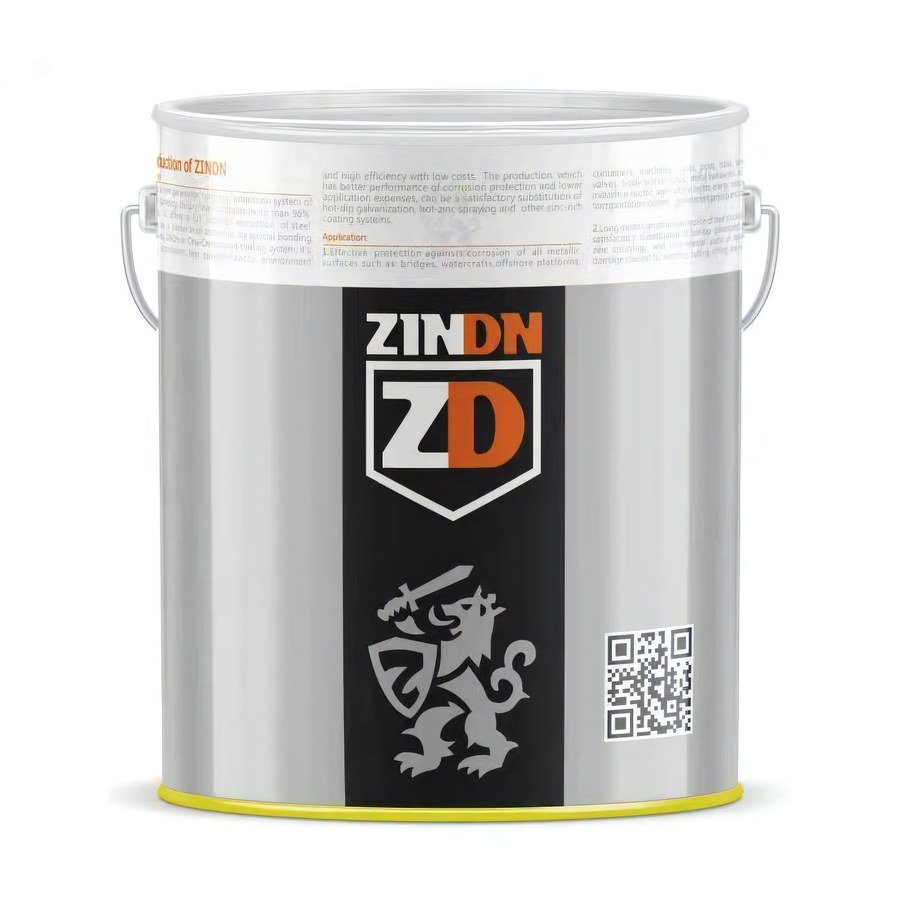
ZD6310-N01F Epoxy Oil-resistant Static-dissipative Topcoat belongs to Epoxy and is used as a topcoat. A two-component anticorrosive coating based on epoxy resin and epoxy curing agent, with addition of non-carbon composite conductive filler, anti-rust pigments and additives. Parameters on this page: volume solids 82 ± 2%, dry film thickness 40/80/150 µm, theoretical spreading rate 4.8 m²/L. Comparable models from the same brand: ZD6310 Epoxy Oil-resistant Static-dissipative Topcoat, solvent-free epoxy topcoat ZD6095, epoxy topcoat ZD6510.
Parameter source: ZINDN original technical data sheet (TDS) ZD6310-N01F Epoxy Oil-resistant Static-dissipative Topcoat; values such as spreading rate are converted from TDS parameters and are for selection reference only.
The above content is compiled from the manufacturer's datasheet and this site's parameter tables. For selection, coating systems and lead times, pleaseContact Usfor confirmation.
This page carries the full TDS for this product, translated from the manufacturer's original document. No file download is needed; for an original-language copy, send an enquiry.
| Volume Solids | 82 ± 2% |
|---|---|
| Dry Film Thickness | 40/80/150 µm |
| Theoretical Spreading Rate | 4.8 m2/L |
| VOC | ~250 (tested per GB 30981.2-2025) |
| Density / Specific Gravity | 1.58 ± 0.1 |
| Number of Components | Two-component |
| Flash Point | >25 °C (mixture) |
| Thinner | X-500 Epoxy Thinner |
| Mixing Ratio | Component A (base) : Component B (curing agent) = 12.5:1 (by weight) |
ZD6310-N01F Epoxy Oil Resistant and StaticConductive Topcoat
A two-component anti-corrosion coating composed of epoxy resin, epoxy curing agent asthe base material, and non-carbon composite conductive fillers, anti-rust pigments, andadditives .
Key features
● Excellent adhesion, flexibility, and impact resistance ;
● Excellent oil and corrosion resistance, insoluble and non-swelling after use;
● Has excellent anti-static performance, coating resistivity of 108-1011 Ω.
The anti-static and anti-corrosion protection of compartments and storage tanks loadedwith crude oil, gasoline, aviation gasoline, kerosene, naphtha, and benzene can also beused in other situations where static electricity is required.
| Colour | White or light grey |
|---|---|
| Color | White or light gray |
| Solids content by mass | 82±2% |
| Mass solids | 82 ± 2% |
| Volume Solids | 72±2% |
| Volume solids | 72±2% |
| Typical mixed density (kg/L) | 1.58±0.1 |
Typical density (kg/L): 1.58 ± 0.1. Typical dry film thickness and theoretical spreading rate
| Minimum | Typical | Maximum | |
| Minimum | Typical | Maximum | |
| Dry film thickness (µm) | 40 | 80 | 150 |
| Wet film thickness (µm) | 55.5 | 111 | 208.3 |
| Theoretical spreading rate (m²/L) | 18 | 9 | 4.8 |
| Theoretical spreading rate (m²/kg) | 11.39 | 5.69 | 3.03 |
| Practical Spreading Rate | Allowing for a suitable loss factor |
|---|---|
| Practical spreading rate | consider appropriated loss factor |
| VOC content as supplied (g/L) | ~250 (tested per GB 30981.2-2025) |
| VOC(supplied,g/L) | ~250(follow GB 30981.2-2025) |
| Application instructions | Application instruction |
| Suitable substrates and surface preparation | Suitable substrate and treatment |
● It must be applied on the recommended epoxy oil resistant and static conductive primer, and must be applied within the specified recoating interval. The damaged areas of the primer must be treated with spray treatment to Sa2.5 level (ISO8501-1) or power treatment to St3 level standard, and these areas must be repainted with primer.
● Primer: Clean, dry and free of dirt.
| Application and curing conditions | Application and cure condition |
|---|
substrate temperature and application conditions
● The application environment temperature should be within 5-38 °C, the relative humidity should not exceed 85%, and the substrate temperature should be at least 3 °C above the dew point; Outdoor application is prohibited in adverse weather conditions such as rain, fog, snow, strong winds, and sandstorm etc;
and curing period, adequate ventilation is required;
● When the construction environment temperature is -5~5 °C, appropriate measures should be taken to ensure the normal curing of the paint film.
● Mixing: This product is available in two cans as one set. Before application, firstly stir the main part evenly with a mixer, adding the curing agent at the specified ratio, mix evenly with a mixer, and add an appropriate amount of thinner to adjust to the appropriate application viscosity. Once mixed, it must be used up within the pot life.
● Thinner/cleaner:Thinner X-500
● Mixing ration(by weight): A(main):B(cure agent)=12.5:1
● Induction time: 20 minutes (25 °C) Pot life after mixing (at suitable application viscosity)
Pot life (suitable application viscosity)
| Paint temperature (°C) | 5°C | 15°C | 25°C | 35°C |
| Pot life (hours) | 5.5 | 5 | 4 | 3 |
| Application method | Unit | Airless spray | Air spray | Brush/roller |
| Nozzle orifice | mm | 0.43~0.58 | 1.5~2.5 | —— |
| Nozzle pressure | kg/cm² | 150~200 | 3~4 | —— |
| Thinner* | % | 0~10 | 10~20 | 5~10 |
*Thinner usage depends on required thickness and application condition
Over coating interval (@80 µm DFT)
| Substrate temperature (°C) | 5 | 15 | 25 | 35 |
| Surface dry (hrs) | 4 | 2 | 1 | 30 |
| Dry to handle (hrs) | 24 | 16 | 12 | 8 |
| Minimum overcoating interval (self) (hrs) | 24 | 16 | 10 | 6 |
| Maximum overcoating interval (self) | No limit, but the chalking layer from long-term exposure shall be removed thoroughly before overcoating. No limit, but the surface should be roughened and fully cleaned after long-term exposure. | |||
Note: the above data are measured under good ventilation, typical film thickness and relative humidity ≤ 75%, and are for reference only. Actual drying times and overcoating intervals may be shorter or longer, depending on film thickness, ventilation, humidity, the underlying coat, early handling requirements and mechanical strength.
above are typical data based on good ventilation, typical film thickness and relativehumidity ≤75%, just for reference only.
Real drying time base on impact of over coating interval, film thickness, ventilation,
| humidity, | undercoat, ahead of loading and unloading and mechanical strengthrequirement etc. |
|---|
Adding too much thinner results in sag resistance reduction and slower cure.
● Previous coat:Epoxy oil resistant and static conductive primer
● For details, please consult ZINDN company.
● Must use be used approved thinner.
● During the painting process, contact with water, acid, alkali, etc. is strictly prohibited.
● During the painting process, or shortly after painting, the surface may suffer from water vapor condensation and sudden cooling, which can cause the surface to lose its luster, turn white, and deteriorate in quality.
Package, storage and shelf lifepackage size
| components Packaging drum size | A (base) 20 L | B (curing agent) 5 L |
| Container size | 20 L | 5 L |
| Pack size (weight) | 25 kg | 2 kg |
| Package size(weight) | 25 kg | 2 kg |
| Flash Point | >25 °C (mixture) |
|---|---|
| Flash Point | > 25 °C(Mixed) |
Storage condition
● Must follow national rules. Should be dry, cool, good ventilation and away heat and fire. The container should be well sealed.
Shelf life
● 1 year at good storage condition. After this period the product must be inspected and approved prior to use.
Health, safety and environment
● The product contains flammable substances; site safety shall comply with the relevant national or local regulations. Note the safety labels on the packaging and read the material safety data sheet (MSDS).
● Avoid inhaling solvent vapour and spray mist, avoid skin and eye contact with the paint, and do not swallow the product. Take the necessary precautions for fire and explosion protection and environmental protection. Use the product in a well-ventilated area. In narrow or poorly ventilated spaces, provide forced ventilation.
● This product contains flammable components; the application site has to meet national safety and local government requirement. More details please read and follow material safety data sheet (MSDS).
| ● | Avoid | solvent | vapor | and | paint | mist, | avoid | contacting | skin | and | eyes, | forbidden |
| swallowing, | must | have | necessary | to have | prevention | and | protection | for fire, |
exploration and environment protection solutions. Application under good ventilation,provide sufficient ventilation when in narrow space and in non-good air flow.
● Waste treatment has to follow national and local government requirement.
| Sound | Bright |
|---|
Declare
The product documents and data based our experiments and application experience, usefor application instruction. The application condition is usually out of our control; we onlywarrant product quality itself. ZINDN keeps the authority to modify for improvementwithout pre-notification to customers.
Version
The ZINDN Logo,and ZINDN remarks are properties of group of companies, all thirdparties are not allowed to use without permit.
Information is subject to the manufacturer's latest version; the manufacturer's latest TDS prevails.
The technical parameters on this page are taken from the product's original manufacturer technical datasheet, the copyright of which belongs to the manufacturer. If a rights holder considers the presentation inappropriate, contact us for verification and handling.
For more Q&A on selection, application, acceptance and defect diagnosis, seeFAQsection.
Packaging specifications and batch lead times are subject to actual availability. PleaseContact Uscontact us for project-based calculation.