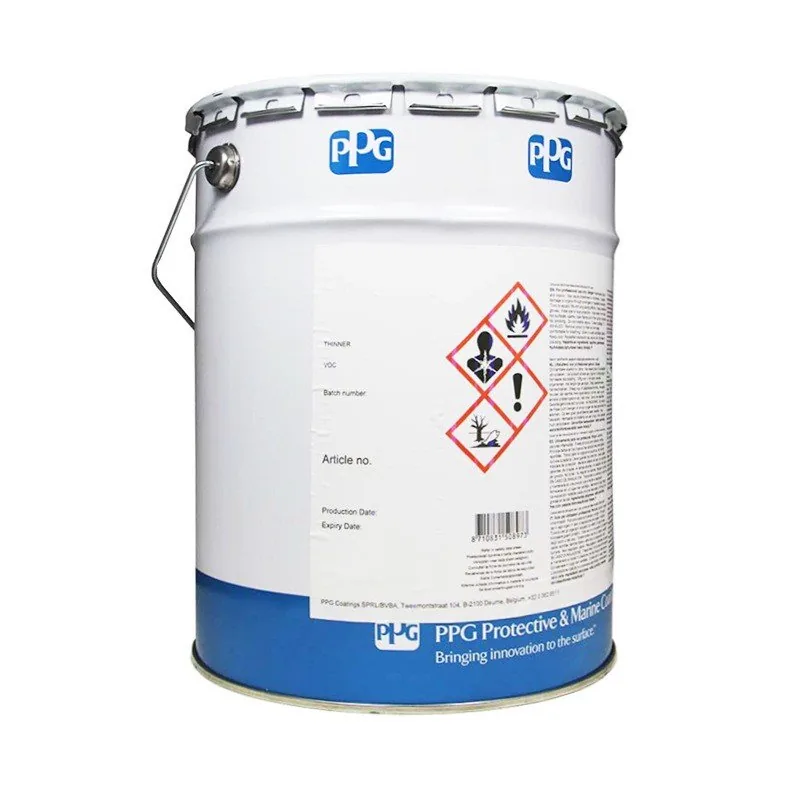
SIGMAZINC 109 Epoxy Zinc-rich Primer 109 is a zinc-rich primer. Parameters on this page: Volume Solids 46 ± 2%, Dry Film Thickness (DFT) 25–40 µm, depending on surface roughness, Theoretical Spreading Rate 11.5 m²/L. Comparable models from the same brand: PPG SIGMAZINC 100 two-component polyamide-cured epoxy zinc dust primer, SIGMAZINC 108 HS revision) page 1/5, SIGMAZINC 109 Epoxy Zinc-rich Primer 109.
Parameter source: PPG original technical data sheet (TDS) “SIGMAZINC 109 Epoxy Zinc-rich Primer 109”; values such as spreading rate are converted from TDS parameters and are for selection reference only.
The above content is compiled from the manufacturer's datasheet and this site's parameter tables. For selection, coating systems and lead times, pleaseContact Usfor confirmation.
This page carries the full TDS for this product, translated from the manufacturer's original document. No file download is needed; for an original-language copy, send an enquiry.
| Volume Solids | 46% ± 2% |
|---|---|
| Dry Film Thickness | 25–40 µm, depending on the surface profile |
| Theoretical Spreading Rate | 11.5 m²/L |
| VOC | Maximum 174 g/kg (according to the 1999/13/EC SED standard) |
| Density / Specific Gravity | 2.7 g/cm³ |
| Number of Components | One-component |
| Thinner | Thinner 91-92 |
| Recoat Interval | 6 h* |
| Pot Life | 48 h at 20 °C, 6 h at 35 °C |
The manufacturer's datasheet for this model does not state the coating position or resin type, so it has not been assigned to the above categories. Browse similar products by category, orContact Usconfirm the coating system.
Three pages in total, September 2005 edition
| Brief | intermediate | Two-component polyamide-cured zinc-rich epoxy primer |
| Key properties | — Primer for various paint systems |
— Good anticorrosive properties— Fast drying, allowing overcoating within a short time— Can be used as a temporary primer for various maintenance systems when a short overcoating interval is required— The subsequent coat must be non-saponifiable— Welding certificate available (see Table 1880)
| Colour and Gloss Basic Data (20 °C) | Grey - Flat (1 g/cm³ = 8.25 lb/US gal, | Grey - Matt 1 m²/L=40.7 ft2/US gal) |
| Specific Gravity | 2.7 g/cm³ | |
| Volume Solids | 46% ±2% | |
| Volatile Organic Compounds (VOC) | Maximum 174 g/kg (according to the 1999/13/EC SED standard) |
Maximum 469 g/L (approx. 3.9 lb/gal)
| Recommended dry film thickness | 25–40 µm, depending on the surface profile | |
| Theoretical Spreading Rate | 11.5 m²/L, 40 µm* | |
| Touch dry time | 10 min at 20 °C* | |
| Recoat Interval | Minimum: | 6 h* |
| Maximum: | Several months* | |
| Fully cured | 7 days* |
(Component Data)
| Shelf Life (cool, dry place) Flash | Shelf Life (in a cool, dry place) | At least 12 months Base at 27 °C, Curing Agent at 27 °C |
| Recommended Substrate | — Steel; abrasive blast cleaning to ISO standard Sa2.5 | |
| Condition and Temperature | — SigmaZinc109 application temperature must not be below 5 °C |
— During application and curing, substrate temperature must be above 5 °C and at least 3 °C above dew point1 / 3
| Instructions for use | Mixing ratio by volume base : hardener = 75 : 25— Base and hardener mixing temperature must preferably be above 15 °C; otherwise thinner should be added to achieve application viscosity— Excess thinner will reduce sag resistance and slow curing— Thinner should be added after components are mixed |
|---|
| Induction Time | None |
| Pot life after mixing | 48 h at 20 °C, 6 h at 35 °C |
Airless Spray
| Recommended thinner | Thinner 91-92 |
| Thinner by volume | 5–10%, depending on the required film thickness and application conditions |
| Nozzle tip size | Approximately 0.43–0.48 mm (0.017–0.019 inch) |
| Spray output pressure | 15 MPa (approximately 150 atm or 2130 psi) |
Air spray
| Recommended thinner | Thinner 91-92 |
| Thinner by volume | 5–10%, depending on the required film thickness and application conditions |
| Nozzle tip size | 1.8–2.2 mm |
| Spray output pressure | 0.3–0.6 MPa (approximately 3–6 atm or 43–85 psi) |
Brush/roller
| Recommended thinner | Thinner 91-92 |
| Thinner by volume | 0-5% |
| Tool cleaning | Thinner 90-53 |
| Safety Precautions | For coatings and recommended thinners, see safety sheets 1430, 1431 and the safety data of related materials |
This is a solvent-borne coating; inhalation of paint mist and solvent must be avoided, skin and eye exposure should be minimized, and contact with undried paint must be avoided
| Appen | dix |
|---|
Film Thickness and Spreading RateTheoretical Spreading Rate (m²/L) 18.4 11.5Dry Film Thickness (µm) 25 402 / 3Recoating Interval ScheduleSubstrate Temperature 10 °C 20 °C 30 °CMinimum Interval (h) 8 6 4Maximum IntervalIn the absence of zinc salts, up to several months— Zinc salts will form on the surface of zinc-rich primer; prolonged exposure to air should be avoided before recoating— In a clean indoor environment, the interval may reach several months— In a clean outdoor environment, the maximum interval is 14 days, but under industrial or marine conditions the interval should be correspondingly shortened— Before recoating, visible contaminants on the surface must be removed with high-pressure water, sweep blasting or mechanical tools— When a longer recoating interval is required, sealing with SigmaCover 522 tie coat within the shortest time is recommendedCuring Time ScheduleSubstrate TemperatureTouch Dry (min) Full Cure (days)10 °C 30 2015 °C 20 1020 °C 10 730 °C 8 5— Sigmazinc 109 can be applied in environments of 5 °C–10 °C, but the curing rate will be reduced— Under such application conditions, the following zinc-containing coatings are recommended: Sigmazinc 19 one-component epoxy zinc-rich primer, SigmaZinc 158 inorganic zinc silicate primer, SigmaZinc 160 inorganic zinc silicate primer for conditions exposed to the atmosphere; or SigmaGuard 750 inorganic zinc silicate primer for conditions in water— Sufficient ventilation must be maintained during application and curing (refer to sheets 1433 and 1434)
| Worldwide applicability | SIGMA coatings are intended to provide the same products worldwide, but minor modifications to products are sometimes required to meet local and international regulations/practices; under such practices, the modified product data shall be used |
|---|
| Refe | rence | Product Data Notes | Refer to sheet 1411 |
| Safety Guidance | Refer to sheet 1430 |
Confined Space Safety and HealthSafety Explosion Hazard - Toxicity HazardRefer to sheet 1431Work in Confined SpacesRefer to sheet 1433Ventilation Technical GuidanceRefer to sheet 1434Steel Surface PreparationRefer to sheet 1490
| Product Data Sheet Number | 74013/3 |
|---|
Data is subject to the manufacturer's latest version; in all cases the manufacturer's latest TDS prevails.
For more Q&A on selection, application, acceptance and defect diagnosis, seeFAQsection.
Packaging specifications and batch lead times are subject to actual availability. PleaseContact Uscontact us for project-based calculation.