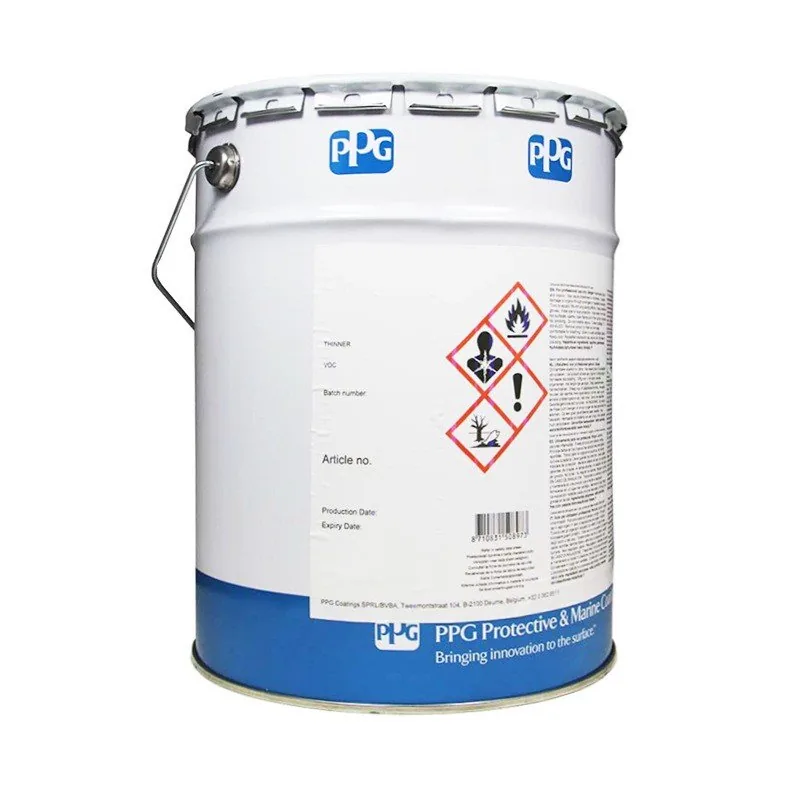
Quick Specs
PPG HI-TEMP 1027 HD Two-component Ambient-curing Composite Polymer Heat-resistant Coating is a heat-resistant coating. Two-component ambient-curing composite polymer heat-resistant coating. Developed specifically as a coating solution for protecting carbon steel and stainless steel against corrosion under insulation. Specifications on this page: volume solids 65 ± 2%, DFT 125-300 µm (5.0-12.0 mil) per coat, theoretical spreading rate 2.6 m²/L. Comparable products of the same brand and type: PPG HI-TEMP 1000 VHA Heat-resistant Coating 1000 VHA, PPG HI-TEMP 1027 HD Two-component Ambient-curing Composite Polymer Heat-resistant Coating, PPG HI-TEMP 500 VHA Heat-resistant Coating 500 VHA.
Parameter source: PPG manufacturer's Technical Data Sheet (TDS) "PPG HI-TEMP 1027 HD Two-component Ambient-curing Composite Polymer Heat-resistant Coating"; values such as spreading rate are converted from TDS parameters and are for product selection reference only.
The above content is compiled from the manufacturer's datasheet and this site's parameter tables. For selection, coating systems and lead times, pleaseContact Usfor confirmation.
This page carries the full TDS for this product, translated from the manufacturer's original document. No file download is needed; for an original-language copy, send an enquiry.
Key properties
- A coating designed as a corrosion protection solution for carbon steel and stainless steel under thermal insulation.
- Scuff and abrasion resistance of the coating is enhanced for ease of shipment
- Suitable for shop application during the fabrication stage of new-build projects and for application at installation sites
- Resistant to thermal cycling from -196 °C (-320 °F) to 540 °C (1000 °F).
- Resistant to thermal shock, dry/wet and hot/cold alternating cycles, intermittent immersion and boiling water.
- Under dry surface conditions, the coating is heat-resistant up to 650°C (1200°F).
- Good resistance to UV (ultraviolet) ageing.
- Designed as a one-coat system; a two-coat system may also be used for complex structures or where otherwise specified.
- Curing temperature may be as low as -10 °C (14 °F).
Colour and gloss
Notes
- Slight differences in apparent colour of the coating may occur between production batches or after the substrate surface operating temperature exceeds 316°C (600°F).
Basic data 20 °C (68 °F)
Parameters after mixing
Curing agent: at least 12 months; store in a dry and cool environment.
Notes
- See the supplementary data sheet — theoretical spreading rate versus dry film thickness table.
- See supplementary parameters table — curing time table.
Recommended substrate condition and temperature
Carbon steel substrates under thermal insulation and exposed carbon steel without insulation
- All oil, grease, dust and other contaminants must be removed, especially soluble salts.
- Grind welds smooth, round off edges and remove weld spatter.
- Dry abrasive blast cleaning to SSPC-SP6, 'commercial blast' (or Sa2 of ISO 8501-1), achieving a surface profile of 25–50 µm (1.0–2.0 mil) is recommended.
- Bare steel; high-pressure water jetting to VIS WJ2/3L of the SSPC standard
Stainless steel substrates under thermal insulation and exposed stainless steel without insulation
- All oil, grease, dust and other contaminants must be removed, especially soluble salts.
- Grind welds smooth, round off edges and remove weld spatter.
- Light blasting or other abrading of the surface in accordance with SSPC SP16, to ensure a uniform and dense surface profile of at least 25 µm (1.0 mil).
- Small surface areas may be cleaned with chlorine-free solvent. Large surface areas may be cleaned by high- or low-pressure water washing or steam cleaning with an alkaline detergent (e.g. Prep 88), followed by rinsing with fresh water. The water used should be potable or better and should be checked to ensure minimal salt content. Do not use any chemical additives in the rinse water
Notes
- Do not wipe stainless steel surfaces with chloride-containing solvents.
Substrate temperature and application conditions
- During application, the substrate temperature should be maintained between 10°C (50°F) and 175°C (350°F)
- During application, the substrate temperature must be maintained at least 3 °C (5 °F) above the dew point.
- During curing, relative humidity should be above 20% and below 90%
- Application on hot substrate surfaces: the temperature should be above 50°C (122°F) and below 175°C (350°F)
When applying the topcoat, initial high-temperature exposure is required
- When applied as a topcoat, to prevent solvent retention causing blistering, the substrate temperature must be raised slowly at 1 to 2 °C per minute to 177–204 °C (350–400 °F) over 2 hours. Alternatively, the initial temperature rise may be made in 25 °C increments, holding at each temperature for 20–30 minutes.
Notes
- Before topcoat application, heating HI-TEMP 1027 HD once to 177°C (350°F) and holding for two hours may also serve as an alternative to the above heating procedure.
Coating system specification
Service environments with and without thermal insulation: applied directly to ambient-temperature or hot carbon steel surfaces.
- PPG Heat-Resistant Coating 1027 HD: by continuous back-and-forth and cross spraying, a dry film thickness of at least 250–300 µm (10–12 mil) can be achieved in one pass. For details, refer to the application guide.
- Designed as a single-coat system; where a different film thickness is specified, two coats may be used instead to meet the requirement.
- Under high-corrosivity conditions (C4–C5) and where sea transport is required.
- Inorganic zinc silicate primer DIMETCOTE 9: dry film thickness 50–75 µm (2.0–3.0 mil).
- Heat-resistant primer HI-TEMP 1027 HD: dry film thickness 250–300 µm (10.0–12.0 mil).
Notes
- Substrates coated with inorganic zinc silicate primer Dimetcote 9 shall not be coated directly while hot.
- Systems using PPG DIMETCOTE 9 as primer can withstand service temperatures up to 540°C (1000°F), provided the dry film thickness of PPG DIMETCOTE 9 is between 50 and 65 µm (2.0 and 2.5 mil)
- For surfaces without thermal insulation, use a compatible PPG HI-TEMP 500 or PPG HI-TEMP 1000 according to the maximum temperature requirement. For direct application to hot surfaces, consult the PPG field technical service representative.
Environments with and without thermal insulation: may be applied directly to ambient-temperature or hot stainless steel substrates.
- PPG Heat-Resistant Coating 1027 HD: by continuous back-and-forth and cross spraying, a dry film thickness of at least 250–300 µm (10–12 mil) can be achieved in one pass. For details, refer to the application guide.
- Designed as a single-coat system; where a different film thickness is specified, two coats may be used instead to meet the requirement.
Notes
- For surfaces without thermal insulation, use a compatible PPG HI-TEMP 500 or PPG HI-TEMP 1000 according to the maximum temperature requirement. For direct application to hot surfaces, consult the PPG field technical service representative.
Instructions for use
Volume mixing ratio: base to hardener 2:1
- Using a pneumatic mixer, pre-mix each component in its original container at moderate speed, then slowly pour the hardener component into the base component while starting the mixer, and continue mixing for 1–2 min until fully dispersed and homogeneous.
Air spray
- Thinning not recommended.
Airless spray (single-feed pump)
- Thinning not recommended.
Brush/roller
- Spray application is always the preferred method; where site conditions do not allow spraying, brush or roller application may be used. In such cases, select a suitable brush or short-nap roller and keep the brush or roller moving in the same direction at all times.
Cleaning solvent
- Thinner 21-06 (AMERCOAT 65).
Supplementary parameters
Film thickness and theoretical spreading rate
Curing time for a 250 µm (10.0 mil) dry film thickness
Notes
- The minimum recoat intervals listed for subsequent coats/topcoats apply to compatible topcoats. When PPG Heat-resistant Coating 1027 HD is recoated with itself, the minimum recoat interval need not be considered.
- Coating drying times depend on the ambient air temperature, steel substrate temperature, film thickness, ventilation and other environmental conditions.
- When the ambient relative humidity is < 50%, curing speed is generally reduced and the time to full cure of the coating is extended.
- For the shortest drying time before applying thermal insulation, twice the hard-dry time is recommended, to ensure sufficient solvent release.
Pot life (at normal application viscosity)
Safety Precautions
- After reviewing the MSDS, apply the coating in accordance with the familiarised requirements. Before contact with this product, read the MSDS carefully from a health and safety standpoint to fully grasp the relevant information. All handling, application and disposal of this product must comply with national and local laws and regulations on health, safety and environmental protection, including reference to and implementation of valuable practical experience and recognised standards for safe coating application, such as SSPC PA1, Shop, Field, and Maintenance Painting of Steel.
Worldwide applicability
Although PPG Protective & Marine Coatings is committed to providing completely consistent products to users worldwide, from time to time it may be necessary to make minor adjustments to specific products to comply with local/national regulations or environmental requirements. In the following cases, use the corresponding alternative version of the product data sheet instead.
Reference information
- Guide | PPG HI-TEMP 1027 HD | Application guidelines
- Information sheet | Explanation of product data sheets
Quality guarantee
PPG warrants (1) that it has good title to the product, (2) that the product quality conforms to the relevant technical quality specifications in force at the date of manufacture of the product, and (3) that the supplied product is free of lawful claims by third parties for infringement of US patent rights. The above warranties are limited to those given by PPG and other express or implied warranties required by applicable laws and regulations for transactions and commercial practice; any abuse contrary to the stated conditions, and any other warranty for special purposes or uses, are excluded, and PPG shall be free from liability. To claim under this warranty, the buyer must notify PPG in writing within five (5) days of discovering the quality defect, and the date must be within the product's valid storage period or within one (1) year from delivery of the product to the buyer. If the buyer fails to notify PPG of the defect as required above, this will prejudice the buyer's right to obtain compensation under this warranty from PPG!
Limitation of liability
In all cases, PPG shall not be liable for any indirect, special, incidental or consequential loss of any kind arising from or in connection with the use of this product (whether based on negligence, strict liability or tort). The information in this product data sheet is based on laboratory tests we believe to be reliable, and is provided for guidance only. PPG may revise this information at any time as experience accumulates and product development progresses. All recommendations and advice concerning the use of this product, whether in technical documents, in response to an enquiry or otherwise, are given to the best of our knowledge and are believed to be reliable. Our products and related information are provided for industrial users possessing the necessary knowledge and practical skills, and it is the end user's responsibility to determine whether the product is suitable for the specific use. The buyer, having performed such evaluation, proceeds entirely at its own risk. The quality and condition of the substrate on site, and the many other factors affecting product use and application, are beyond PPG's control. Therefore, PPG accepts no liability for any loss, injury or damage arising from the use of the information in this product data sheet (unless otherwise provided in a written agreement). Different application environments, changes to the application process or extrapolation of the reference data may result in failure to achieve the expected coating quality. This product data sheet supersedes all previous versions. The buyer is responsible for confirming that the data sheet in hand is the latest version before using the product. The latest version is published on the official website of PPG Protective & Marine Coatings: www.ppgpmc.com. In case of discrepancy between the Chinese version and the original English version of the product data sheet, the English original shall prevail.
The PPG logo, and all other PPG marks are property of the PPG group of companies. All other third-party marks are property of their respective owners.
FAQ
- How many components does PPG HI-TEMP 1027 HD have?
- PPG HI-TEMP 1027 HD is a two-component product; mix in the ratio given in the Application Data table on this page before use.
- What dry film thickness is typically applied for PPG HI-TEMP 1027 HD?
- PPG HI-TEMP 1027 HD is typically applied at 125–300 µm (5.0–12.0 mil) dry film thickness per coat, depending on the coating system and design requirements.
- What is the theoretical spreading rate of PPG HI-TEMP 1027 HD?
- The theoretical spreading rate of PPG HI-TEMP 1027 HD is 2.6 m²/L; actual consumption is adjusted for substrate roughness, application loss and colour hiding power.
- What is the volume solids of PPG HI-TEMP 1027 HD?
- The volume solids of PPG HI-TEMP 1027 HD is 65 ± 2%.
- What is the VOC of PPG HI-TEMP 1027 HD?
- The VOC of PPG HI-TEMP 1027 HD is a maximum of 408.0 g/L (approximately 3.4 lb/gal).
- Which thinner is used with PPG HI-TEMP 1027 HD?
- Recommended thinner for PPG HI-TEMP 1027 HD: application below 50°C (122°F): thinner 21-06 (Amercoa….
- Where can PPG HI-TEMP 1027 HD be purchased?
- RichTech Industrial Technology (Shanghai) Co., Ltd. distributes industrial and marine coatings; PPG PPG is one of our regularly stocked brands, with coating selection, system design and quantity calculation support. Address: 10F, Changhui Building, 799 Yinxiang Road, Jiading District, Shanghai, China. Tel: +86 21 5056 8299 (9:00–21:00).
For more Q&A on selection, application, acceptance and defect diagnosis, seeFAQsection.