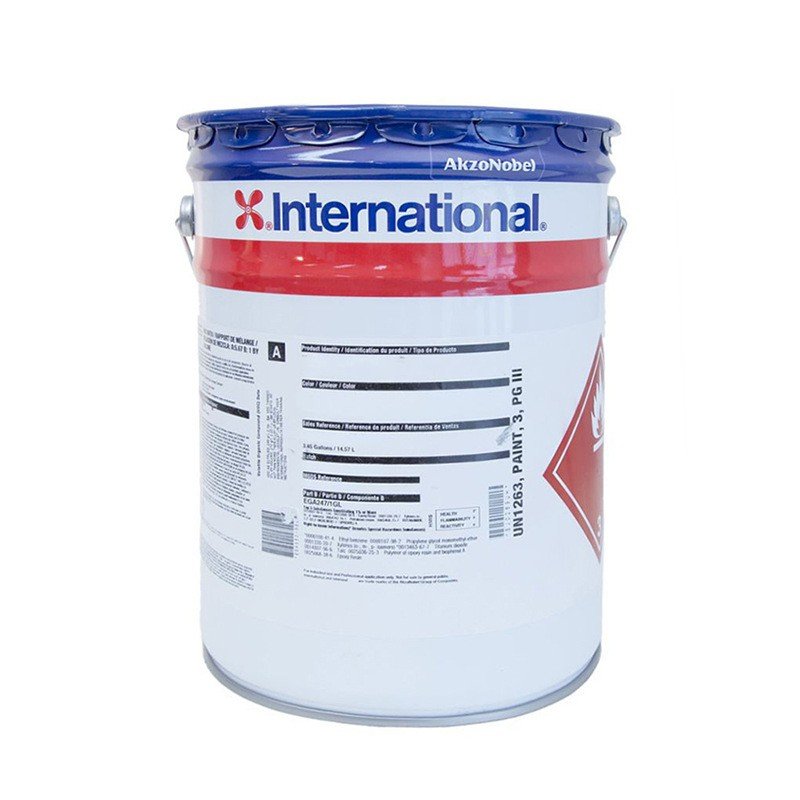
Intertherm 7050 High-performance Epoxy Composite Insulation Coating is an epoxy coating. It allows Chartek to be used at substrate operating temperatures of 80 °C (176 °F) to 120 °C (248 °F), and provides protection to Chartek where external heat sources are present. Design intent: to provide thermal insulation and anticorrosive protection independently, or to serve as part of the Chartek fire protection system in environments with continuous operating temperatures from -40 °C (-40 °F) to +120 °C (+248 °F). Intertherm 7050 may be applied at air temperatures as low as 5 °C (41 °F), with the surface temperature at least 3 °C (5 °F) above the dew point. Parameters on this page: volume solids 100%, two-component.
Parameter source: AKZONOBEL original technical data sheet (TDS) for Intertherm 7050 High-performance Epoxy Composite Insulation Coating; values such as spreading rate are converted from TDS parameters and are for model selection reference only.
The above content is compiled from the manufacturer's datasheet and this site's parameter tables. For selection, coating systems and lead times, pleaseContact Usfor confirmation.
This page carries the full TDS for this product, translated from the manufacturer's original document. No file download is needed; for an original-language copy, send an enquiry.
| Volume Solids | 100% |
|---|---|
| Dry Film Thickness | — |
| Theoretical Spreading Rate | — |
| VOC | 0.00 lb/gal (0 g/L) US Environmental Protection Agency Method 24 0 g/… |
| Density / Specific Gravity | 0.57 g/cm³ Note: the final density depends on the application method. Generally, the density of spray application |
| Number of Components | Two-component |
| Thinner | Do not thin |
| Mixing Ratio | Always mix the whole unit of paint |
| Colour / Appearance | Pink after uniform mixing (Component A - pink; Component B - white) INTERT… |
For more Q&A on selection, application, acceptance and defect diagnosis, seeFAQsection.
Intertherm 7050 is a solvent-free, 100% solids high-performance epoxy composite insulation coating.
Design intent: to provide thermal insulation and anticorrosive protection independently, or to serve as part of the Chartek fire protection system in environments with continuous operating temperatures from -40 °C (-40 °F) to +120 °C (+248 °F).
Application methods include spray, trowel and casting.
Intertherm 7050 provides good moisture resistance and high resistance to mechanical damage and chemical spillage.
Thermal insulation: provides insulation for piping, vessels and equipment from -40 °C (-40 °F) to +120 °C (+248 °F), for heat conservation or personnel protection.
Fire protection: may be applied beneath or above the International Chartek fire protection system layers. It allows Chartek to be used at substrate operating temperatures of 80 °C (176 °F) to 120 °C (248 °F), and provides protection to Chartek where external heat sources are present.
Corrosion under insulation: in addition to thermal insulation performance, Intertherm 7050 provides long-term anticorrosive protection, thereby avoiding the corrosion under insulation associated with conventional insulation systems. No protective cladding is required; its high compressive strength and impact resistance provide high durability and eliminate damage to the insulation system from foot traffic or accidental loads.
Thermal shock protection: tested under cryogenic liquid spillage and proven to prevent low-temperature embrittlement of steel or cracking and spalling of concrete under thermal shock. When used together with the Chartek fire protection system, Intertherm 7050 can provide both thermal shock and fire protection in spillage or rupture incidents such as those in LNG processing and storage facilities; it shall not be used where only non-combustible materials are permitted.
| Colour | Pink after uniform mixing (Component A - pink; Component B - white) INTERTHERM 7050 |
|---|---|
| Gloss | N/A |
| Volume Solids | 100% |
| Typical thickness | Dependent on insulation and anticorrosion requirements. Typically 5–50 mm (0.2–2 in). |
| Density | Nominal: 0.57 g/cm³ (36 lb/cu.ft.) Note: the final density depends on the application method. Generally, the density of spray application is 7% higher than the nominal density. |
| Application Methods | Trowel, two-component (multi-component) heated airless spray, drying time to self-recoat interval |
| Temperature | Surface Dry | Hard Dry | Minimum | Maximum |
| 10°C (50°F) | 4 h | 30 h | 4 h | 48 h |
| 15°C (59°F) | 2 h | 12 h | 2 h | 48 h |
| 25°C (77°F) | 1 h | 6 h | 2 h | 48 h |
| 40°C (104°F) | 1 h | 4 h | 1 h | 24 h |
Drying times measured at 25 mm (1 in) dry film thickness. For extended recoat intervals, consult the International Protective Coatings department.
| Flash point (typical) | Component A >106 °C (223 °F); Component B >106 °C (223 °F); mixed >106 °C (223 °F) |
|---|---|
| Volatile Organic Compounds | 0.00 lb/gal (0 g/L) US Environmental Protection Agency Method 24 0 g/kg EC Solvent Emissions Directive content (Council Directive 2010/75/EU) Coating hazard GB 30981.2-W-Pb≤1000-NC complies with GB 30981.2-2025. For further details, refer to the 'Product Characteristics' section. |
All surfaces to be coated must be clean, dry and free of contaminants. Before application, all surfaces must be assessed and prepared in accordance with ISO 8504:2019.
Blast cleaning: blast cleaning to Sa2½ (ISO 8501-1:2007) or SSPC-SP10 is the recommended method of surface preparation; where a suitable primer is used, blast cleaning to Sa2 (ISO 8501-1:2007) or SSPC-SP6 is also acceptable. Intertherm 7050 may be applied directly to blast-cleaned substrates or approved anticorrosive primers. If oxidation occurs between blast cleaning and application of the primer or Intertherm 7050, the surface shall be re-blasted to the specified visual standard.
Surface defects exposed during blasting must be ground, filled or treated by a suitable method.
Recommended angular surface profile of 50–75 µm (2–3 mils).
Pre-primed surfaces: Intertherm 7050 may be applied over approved anticorrosive primers. The primer surface shall be dry and free from all contaminants, and Intertherm 7050 shall be applied within the specified recoat interval (refer to the relevant product data sheet).
Areas of rupture or damage shall be prepared to the specified standard (for example, abrasive blast cleaning to Sa2½ (ISO 8501-1:2007) or SSPC-SP10, or power tool cleaning to SSPC-SP11), and the primer shall be repaired before application of Intertherm 7050.
Surfaces shall be blast cleaned to Sa2½ (ISO 8501-1:2007) or SSPC-SP10. The preferred primer under high-temperature conditions is Intertherm 228, applied at a dry film thickness of 75–100 µm (3–4 mils).
For surfaces blast cleaned to Sa2 (ISO 8501-1:2007) or SSPC-SP6, or power tool cleaned to SSPC-SP11, the preferred primer under high-temperature conditions is Interplus 256, applied at a dry film thickness of 150–200 µm (6–8 mils).
| Mixing | Manual application: before mixing, each component shall be stored at 21–32 °C (70–90 °F) for 24 h. |
|---|
The paint is supplied as a unit in two separate cans. Always mix the whole unit in the supplied ratio. Once mixed, a unit of paint shall be used within the specified pot life.
(1) Stir the base (Component A) with a power mixer.
(2) Stir the curing agent (Component B) with a power mixer.
(3) Mix all of the curing agent (Component B) with the base (Component A) and stir thoroughly with a mixer.
For multi-component coating spray application techniques, refer to the Intertherm 7050 Application Manual.
| Mixing ratio | Always mix the whole unit of paint |
|---|
| Pot life | 10°C (50°F) | 15°C (59°F) | 25°C (77°F) |
| 30 min | 15 min |
| Plural-component airless spray | Recommended | Refer to the Intertherm 7050 Application Manual. |
| Trowel application | Recommended | Apply using standard trowel techniques. |
The first coat shall be applied by hand trowel to a thickness of 3–6 mm (1/8–1/4 in) to ensure full wetting of the substrate.
The final surface shall be rolled to eliminate trowel marks and high spots and to achieve uniform thickness. Use a short-pile roller wetted with International GTA123.
If the required total film thickness cannot be achieved in a single application, the Intertherm 7050 surface shall be scored to provide a key for subsequent coats.
| Thinner | Do not thin |
|---|---|
| Cleaner | International GTA822 |
| Interruption of work | Do not leave paint in hoses, spray guns or spray equipment. Flush all equipment thoroughly with International thinner. |
Mixed paint should not be resealed. If work is interrupted for too long, mix a fresh batch of paint for application.
| Cleaning | Clean all equipment immediately after use with International thinner. Flushing spray equipment periodically during application is recommended. Cleaning frequency depends on the volume sprayed, temperature and time, including all interruptions. |
|---|
Surplus paint and empty containers must be disposed of in accordance with the relevant local regulations.
Throughout application, the following conditions must be present (or created):
| Minimum air temperature | 10 °C (50 °F) - recommended |
|---|---|
| Maximum humidity | 85 % |
| Surface temperature | At least 3 °C (5 °F) above the dew point of the surrounding air. |
General: all surfaces to be coated shall be maintained clean and dry at all times. Intertherm 7050 may be applied at air temperatures as low as 5 °C (41 °F), with the surface temperature at least 3 °C (5 °F) above the dew point.
Under these conditions curing is extended, and amine bloom may form on the Intertherm 7050 film surface, affecting adhesion of subsequent coats. If amine bloom forms, remove it by solvent wiping.
Application of Intertherm 7050 by moulding or casting is also recommended. Modified multi-component spray equipment may be used to inject the product into moulds
| (such as pipe half-shells). | For details, consult the Intertherm 7050 Application Manual from International Paint. To obtain the maximum film thickness in a single coat, multi-component airless spray is preferred. Where trowel or other methods are used, multiple coats may be required to achieve the total specified system dry film thickness. Where very high thicknesses are required (depending on environmental conditions, typically exceeding 40–50 mm (1.6–2.0 in)), the coating shall be applied in two stages, with the second stage applied after the first stage has cured. This prevents excessive heat build-up from the exothermic reaction during curing. For further recommendations, contact the International Protective Coatings department. |
|---|
Only equipment meeting International Protective Coatings requirements shall be used; refer to the Intertherm 7050 Application Manual and consult an International Protective Coatings technical service representative.
Other surface preparation: depending on specific project conditions, International Paint may also provide procedures for wet blasting, needle gun and ultra-high pressure water jetting. Seek specific recommendations from the International Paint Fire and Insulation Products department.
Operating precautions: the maximum operating temperature of Intertherm 7050 is 120 °C (248 °F).
As with all epoxy coatings, the Intertherm 7050 film will chalk and fade under exterior exposure. These phenomena do not affect anticorrosive or insulating performance.
Where a durable decorative finish is required, or surface flame spread is to be reduced, overcoat with the recommended topcoat.
Epoxy cladding system: under severe service conditions, a more durable outer layer is required over the Intertherm 7050 surface; the International flexible cladding system may be used. The system consists of woven glass tape approximately 127 mm (5 in) wide, 50% overlapped, impregnated with flexible epoxy resin.
For details, consult the Intertherm 7050 Application Manual from International Paint. Dry film thickness calculation: the thickness of Intertherm 7050 required depends on design requirements and the operating conditions of the structure to be protected.
For standard pipe sizes and utility service conditions, dry film thickness requirements are available from published tables. For other applications, D.F.T. recommendations will be provided by International Protective Coatings.
Thermal properties
| Thermal conductivity: | At 20 °C, 0.118 W/(m·K) US ASTM C177 (at 68 °F, 0.068 BTU/ft-h-°F); at 60 °C, 0.120 W/(m·K) US ASTM C177 (at 140 °F, 0.069 BTU/ft-h-°F) |
|---|---|
| Heat: | 1250 J/(kg·K) (0.299 BTU/(lb·°F)) |
Intertherm 7050 may be applied directly to correctly prepared, blast-cleaned substrates. Where a primer is used, the following are recommended: Intertherm 228, Interplus 256. Intertherm 7050 is overcoated for identification or to provide additional protection.
The following topcoats are recommended to provide a durable decorative finish: Interfine 629HS, Interthane 990. Ideally, Intertherm 7050 should be overcoated immediately after hard dry to avoid contamination of the coating. (Refer to the guidance in the table on page 1.)
For details of topcoats used to reduce surface flame spread, or of other approved primers/topcoats, consult the International Protective Coatings department
| For further information on the industry standards, terms and abbreviations used in this datasheet, see www.international-pc.com | In the following documents on the website: • Definitions and abbreviations • Surface preparation • Coating application • Theoretical and practical spreading rate. These sections are also available as separate publications on request. |
|---|
This product must be applied at the production site by professional applicators in accordance with the recommendations in this manual, the Material Safety Data Sheet and the instructions on the container label. Do not use this product without first reviewing the Material Safety Data Sheet (MSDS) that International Paint provides for its customers.
All work related to the application and use of this product must be carried out in accordance with the relevant national health, safety and environmental standards and regulations.
If welding or flame cutting is required on metal coated with this product, dust and fumes will be generated; use appropriate personal protective equipment and adequate local ventilation.
If in doubt about the suitability of this product for the intended use, consult AkzoNobel for further advice.
| Packaging Specifications | Component A | Component B | ||
| Weight | Packaging | Weight | Packaging | |
| 30 kg | 10.7 kg | 20 L | 8.6 kg | 20 L |
¹ Supplied as: 2 × 10.7 kg Component A in 20 L containers, 1 × 8.6 kg Component B in 20 L containers.
For other packaging sizes, contact AkzoNobel.
| Packaging Specifications | Component A | Component B |
| 30 kg | 13.55 kg | 11.8 kg |
| Shelf life | At least 12 months at 25 °C (77 °F). Thereafter, inspection is required. Store in a dry, cool environment away from heat and sources of ignition. |
|---|
The information given in this product data sheet is not exhaustive. Anyone who uses, for any purpose, any product other than those specifically recommended in this data sheet without first obtaining our written confirmation does so at their own risk as regards the suitability of the product for the intended purpose. Although to the best of our knowledge all advice or statements given about the product (whether in this data sheet or otherwise) are correct, we cannot control the quality or condition of the substrate, nor the many factors affecting the use and application of the product. Accordingly, unless we specifically agree otherwise in writing, we accept no liability, to the maximum extent permitted by law, for any product performance problem arising, or for any loss or damage caused by use of the product. We hereby disclaim any warranty or representation, express or implied, arising by operation of law or otherwise, including but not limited to any implied warranty of merchantability or fitness for a particular purpose. All products supplied and all technical guidance provided are subject to our standard terms and conditions of sale. You should obtain a copy of this document and read it carefully. The information contained in this product data sheet may be amended at any time in the light of experience and of our product development policy. Before using the product, it is the customer's responsibility to check with the local representative that the data sheet in their possession is the latest version.
This product data sheet is available on www.international-marine.com or www.international-pc.com and should be identical to this copy. If the version on the website differs from this one, the version on the website shall prevail.
© 2026/5/26 AkzoNobel. All rights reserved.
All registered trademarks mentioned in this publication are licensed to or owned by AkzoNobel.
www.international-pc.com
Packaging specifications and batch lead times are subject to actual availability. PleaseContact Uscontact us for project-based calculation.