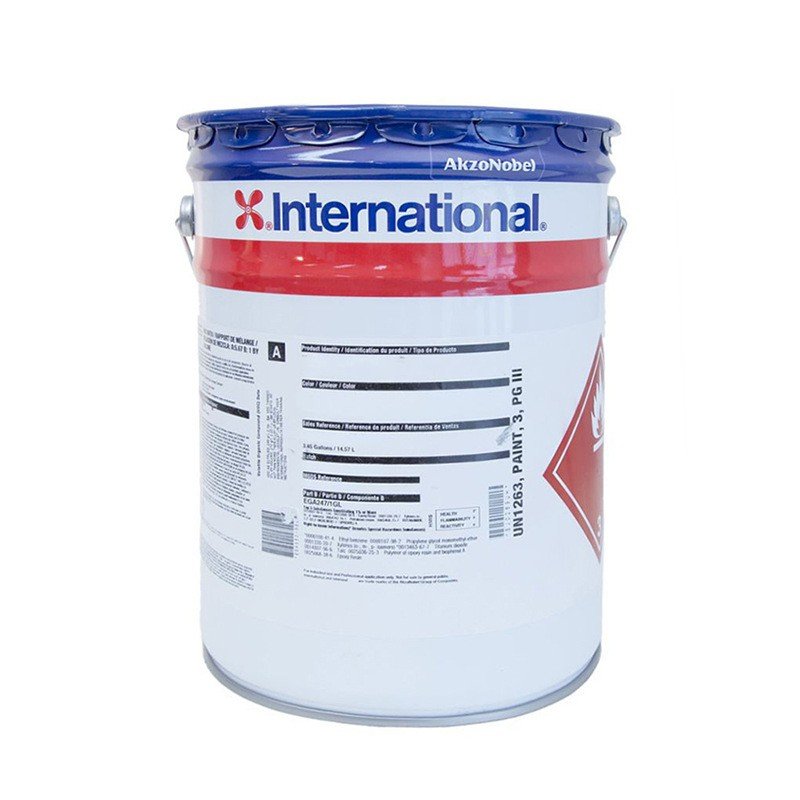
Interseal 1052 Epoxy Paint belongs to Epoxy. For maintenance, on steel surfaces prepared by hand tool cleaning and water jetting. A two-component, low-VOC, high-solids, fast-curing epoxy anticorrosive coating. A low-temperature curing agent is available to ensure fast curing below 5°C, but this curing agent may cause colour change or rapid gloss loss of the paint under natural conditions. Parameters on this page: dry film thickness 75-250 µm (3-10 mil), theoretical spreading rate 6.64 m²/L, number of components two-component.
Parameter source: AKZONOBEL original technical data sheet (TDS) 'Interseal 1052 Epoxy Paint'; values such as spreading rate are converted from TDS parameters and are for selection reference only.
The above content is compiled from the manufacturer's datasheet and this site's parameter tables. For selection, coating systems and lead times, pleaseContact Usfor confirmation.
This page carries the full TDS for this product, translated from the manufacturer's original document. No file download is needed; for an original-language copy, send an enquiry.
| Volume Solids | 83% |
|---|---|
| Dry Film Thickness | 75–250 µm (3–10 mil) |
| Theoretical Spreading Rate | 6.64 m²/L |
| VOC | 141 g/kg EU Solvent Emissions Directive content (Council Directive 2010/75… |
| Density / Specific Gravity | 1.63 kg/L (13.6 lb/gal) |
| Number of Components | Two-component |
| Thinner | Do not thin beyond the limits of local regulations |
| Mixing Ratio | 4 parts : 1 part (by volume) |
| Colour / Appearance | Limited range, INTERSEAL 1052 |
For more Q&A on selection, application, acceptance and defect diagnosis, seeFAQsection.
A two-component, low-VOC, high-solids, fast-curing epoxy anticorrosive coating.
Zinc phosphate and micaceous iron oxide versions are available. The micaceous iron oxide version complies with BS5493:1977 KUID and KUIF.
Specifically designed for blast-cleaned steel structures in atmospheric environments. Ideal for medium corrosive environments and where fast drying/fast recoat is required.
For maintenance, on steel surfaces cleaned by hand tool and water jetting.
| Colour | Limited range, INTERSEAL 1052 |
|---|---|
| Gloss | Semi-gloss |
| Volume Solids | 83% |
| Typical thickness | DFT 75–250 µm (3–10 mil) corresponds to WFT 90–301 µm (3.6–12 mil) |
| Theoretical Spreading Rate | 6.64 m²/L at 125 µm dry film thickness and the stated volume solids; 266 ft²/US gal at 5 mil dry film thickness and the stated volume solids |
| Practical Spreading Rate | Allowing for a suitable loss factor |
| Application Methods | Suitable for airless spray, brush, roller. Drying time; recommended topcoat recoat interval |
| Temperature | Surface Dry | Hard Dry | Minimum | Maximum |
| 5°C (41°F) | 8 h | 24 h | Unlimited¹ | |
| 15°C (59°F) | 4 h | 8 h | Unlimited¹ | |
| 25°C (77°F) | 2 h | 5 h | Unlimited¹ | |
| 40°C (104°F) | 90 min | 4 h | Unlimited¹ | |
¹ See the Definitions and Abbreviations of the International Paint Protective Coatings Division. For low-temperature curing, other hardeners are available. For details, see the 'Product Characteristics' section.
| Flash point (typical) | Component A 25 °C (77 °F); Component B 28 °C (82 °F); mixed 30 °C (86 °F) |
|---|---|
| Product weight | 1.63 kg/L (13.6 lb/gal) |
| Volatile Organic Compounds | 141 g/kg EU Solvent Emissions Directive content (Council Directive 2010/75/EU) 171 g/L China national standard GB 23985. For more detailed information, refer to the section on 'Product Characteristics'. |
The performance of this product depends on the degree of surface preparation. All surfaces to be coated must be clean, dry and free of contamination. Before painting, all surfaces must be assessed in accordance with ISO 8504:2000
| assessed and prepared in accordance with the standard. | Accumulated dirt and soluble salts must be removed. Dirt is generally brushed off with a dry bristle brush. Soluble salts should be washed off with fresh water. |
|---|
Blast cleaning: blast clean steel surfaces to Sa2½ (ISO 8501-1:2007) or SSPC-SP6. If oxidation occurs between blast cleaning and application of Interseal 1052, re-blast the surface to the specified visual standard.
Surface defects exposed by blast cleaning must be ground, filled or treated by a suitable method.
Interseal 1052 is suitable for application over blast-cleaned surfaces that originally met the above standard but have been allowed to weather for 7-10 days under good shop conditions. The surface then degrades to Sa2, but shall be free from loose powdery deposits.
Hand or power tool preparation (applicable only to aluminium-pigmented products): hand or power tool clean to the minimum standard of St2 (ISO 8501-1:2007) or SSPC SP2.
Note: all mill scale must be removed; areas that cannot be suitably prepared by chipping or needle gun must be spot blast cleaned to Sa 2 (ISO 8501-1:2007) or SSPC-SP6 minimum. This generally applies to rust grades C or D of this standard.
Ultra-high pressure water jetting / wet blasting (applicable only to aluminium-pigmented products): can be applied to surfaces prepared to Sa2½ (ISO 8501-1:2007) or SSPC SP6, with flash rust not below HB2½M (refer to International Paint hydroblasting standard) or SB2½M (refer to International Paint slurry blasting standard). In some cases, application is also possible on damp surfaces. For further information, contact International Paint Industrial Coatings.
Welds and damaged areas of shop-primed steel structures must be blast cleaned to Sa 2½ (ISO 8501-1:2007) or SSPC-SP6.
If the shop primer shows large-scale breakdown, the entire area must be blast cleaned.
| Mixing | This product is supplied in two containers forming one unit. Mix the two components in the specified ratio in one operation. Once mixed, use within the specified pot life. |
|---|
(1) Stir the base (Component A) with a power mixer.
(2) Mix all of the curing agent (Component B) with the base (Component A) and stir thoroughly with a power mixer.
| Mixing ratio | 4 parts : 1 part (by volume) |
|---|
| Pot life | 5°C (41°F) | 15°C (59°F) | 25°C (77°F) | 40°C (104°F) |
| 2.5 h | 2 h | 75 min |
| Suitable for airless spray | Recommended nozzle diameter 0.48-0.66 mm (19-26 mil); total paint pressure at the nozzle not less than 176 kg/cm² (2500 psi) |
|---|
| Brush | Applicable — for small-area repair only | Typical thickness 75–100 µm (3–4 mils) |
| Roller application | Typical thickness 75–100 µm (3–4 mils) | |
| Thinner | International GTA220. | Do not thin beyond the limits of local regulations. |
| Cleaner | International GTA822 |
|---|---|
| Interruption of work | Do not leave paint in hoses, spray guns or spray equipment. Flush all equipment thoroughly with International thinner. |
Mixed paint should not be resealed. If work is interrupted for too long, mix a fresh batch of paint for application.
| Cleaning | All equipment should be cleaned immediately after use with International thinner. Flushing spray equipment periodically during daily work is good practice. Cleaning frequency depends on the volume sprayed, temperature, spraying time, including interruptions, and other factors. |
|---|
Surplus paint and empty containers must be disposed of in accordance with the relevant regional regulations.
Apply by airless spray to achieve the maximum film thickness per coat. Application methods other than airless spray cannot achieve the required film thickness. With air spray, several cross coats are required to achieve the maximum film thickness. At low or high temperatures, special application techniques may be required to achieve the maximum film thickness.
If Interseal 1052 is applied by brush or roller, multiple coats may be required to achieve the specified film thickness.
Spray application can achieve a dry film thickness of 75 µm; thinning with 5% by volume GTA220 is recommended.
The temperature of the surface to be coated must be at least 3 °C (5 °F) above the dew point.
Ensure adequate ventilation when applying Interseal 1052 in confined spaces.
Interseal 1052 is not designed for continuous immersion in water.
Condensation on the surface during or after application will cause loss of gloss and a poor-quality film.
Gloss and surface evenness depend on the application method. Avoid mixing different application methods as far as possible.
As with all epoxy paints, Interseal 1052 will chalk and fade on exposure to the atmosphere. This phenomenon does not affect anticorrosive performance.
For durable decorative surfaces requiring good gloss and colour retention, overcoat with the recommended topcoat.
A low-temperature curing agent is available to ensure fast curing below 5°C, but this curing agent may cause colour change or rapid gloss loss of the paint under natural conditions. The coating reaches hard dry in 26 h below 0°C, but the minimum recoat interval at 0°C and -5°C is 40 h and 48 h respectively. The coating can cure at -5°C, but curing time will be significantly extended. The product shall not be applied to substrates below 0°C where ice formation may occur.
Note: VOC values are typical and for guidance only. They may vary with colour and general production tolerances.
| Pot life | -5°C (23°F) | 0°C (32°F) | 5°C (41°F) |
| 8 h | 5.5 h | 3 h |
Interseal 1052 is normally applied directly to steel, but may also be applied over the following primers:
| Interzinc 52 | Interzinc 22 series, Interzinc 72. The following topcoats are recommended for use with Interseal 1052: |
|---|---|
| Intergard 345 | Interthane 870 |
| Intergard 740 | Interthane 990 |
| Interfine 691 | Interthane 990E, Interfine 629HS. For other suitable primers/topcoats, consult International Paint Industrial Coatings. |
| For further information on the industry standards, terms and abbreviations used in this datasheet, see www.international-pc.com | In the following documents on the website: • Definitions and abbreviations • Surface preparation • Coating application • Theoretical and practical spreading rate. These sections are also available as separate publications on request. |
|---|
This product must be applied at the production site by professional applicators in accordance with the recommendations in this manual, the Material Safety Data Sheet and the instructions on the container label. Do not use this product without first reviewing the Material Safety Data Sheet (MSDS) that International Paint provides for its customers.
All work related to the application and use of this product must be carried out in accordance with the relevant national health, safety and environmental standards and regulations.
If welding or flame cutting is required on metal coated with this product, dust and fumes will be generated; use appropriate personal protective equipment and adequate local ventilation.
If in doubt about the suitability of this product for the intended use, consult AkzoNobel for further advice.
| Packaging Specifications | Component A | Component B | ||
| Volume | Packaging | Volume | Packaging | |
| 20 L | 16 L | 20 L | 4 L | 5 L |
For other packaging sizes, contact AkzoNobel.
| Packaging Specifications | Component A | Component B |
| 20 L | 28.8 kg | 3.8 kg |
U.N. shipping number 1263
| Shelf life | Minimum 18 months at 25 °C (77 °F). Thereafter, inspection is required. Store in a dry, cool environment away from heat and sources of ignition. |
|---|
© 2026/6/17 AkzoNobel. All rights reserved.
All registered trademarks mentioned in this publication are licensed to or owned by AkzoNobel.
www.international-pc.com
Information is subject to the manufacturer's latest version; the manufacturer's latest TDS prevails.
The technical parameters on this page are taken from the product's original manufacturer technical datasheet, the copyright of which belongs to the manufacturer. If a rights holder considers the presentation inappropriate, contact us for verification and handling.
Packaging specifications and batch lead times are subject to actual availability. PleaseContact Uscontact us for project-based calculation.