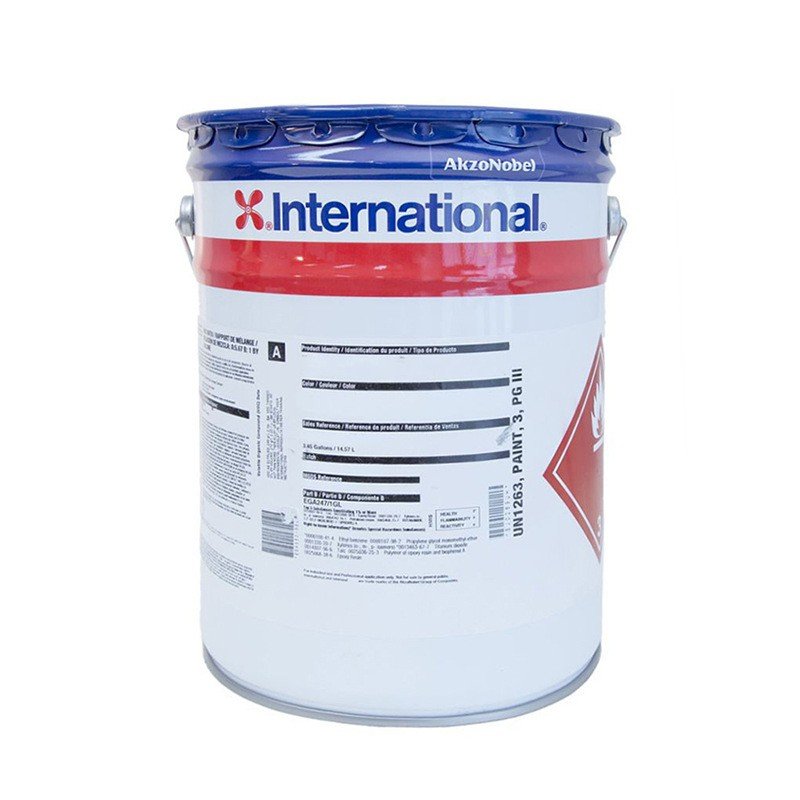
Chartek 2218E is a fire protection coating. Mainly used in high-risk environments such as the oil, gas, petrochemical and power industries. Fire protection certified for steel structures, tested in accordance with ANSI UL1709, BS 476-20/21 (Part 20 Appendix D), EN 1363-2, ISO 22899-1, UL 2431. After mesh application, continue spraying Chartek 2218E to the required film thickness. Only equipment approved by the AKZONOBEL Chartek 2218E application specification manual and technical service representatives may be used. Parameters on this page: volume solids 100%, number of components: two-component.
Parameter source: AKZONOBEL original technical data sheet (TDS) for Chartek 2218E; spreading rate and other values are converted from TDS parameters and provided for product selection reference only.
The above content is compiled from the manufacturer's datasheet and this site's parameter tables. For selection, coating systems and lead times, pleaseContact Usfor confirmation.
This page carries the full TDS for this product, translated from the manufacturer's original document. No file download is needed; for an original-language copy, send an enquiry.
| Volume Solids | 100% |
|---|---|
| Dry Film Thickness | — |
| Theoretical Spreading Rate | — |
| VOC | 0.04 lb/gal (5 g/L) US EPA Method 24, 3 g/… |
| Density / Specific Gravity | 1150 kg/m³ (71.8 lb/ft³) twin-pump spray application (ISO … |
| Number of Components | Two-component |
| Thinner | For premixed application and trowel application only — refer to the Chartek 2218E application specification manual |
| Mixing Ratio | 1.21 parts : 1 part by weight (refer to the Chartek 2218E application… |
| Gloss | N/A |
For more Q&A on selection, application, acceptance and defect diagnosis, seeFAQsection.
Chartek 2218E is a high-performance, patented, boric-acid-free, modified epoxy intumescent fire protection coating.
It is a high-build, two-component coating with excellent durability, providing both anticorrosive and fire protection performance.
Fire protection certified for steel structures, tested in accordance with ANSI UL1709, BS 476-20/21 (Part 20 Appendix D), EN 1363-2, ISO 22899-1, UL 2431.
Suitable for protecting steel from hydrocarbon pool fires and jet fires.
Maintains the functional integrity of structures and process equipment for the specified period.
Mainly used in high-risk environments, such as the oil, gas, petrochemical and power industries.
CHARTEK2218E
| Gloss | N/A |
|---|---|
| Volume Solids | 100% |
| Typical thickness | Depending on the protection required. |
| Theoretical Spreading Rate | 1 kg of Chartek 2218E provides 1 mm of fire protection coating over an area of 0.87 m² (based on two-component spray application). |
| Practical Spreading Rate | Allowing for a suitable loss factor |
| Density | 1150 kg/m³ (71.8 lb/ft³) twin-pump spray application (ISO 1183-1 (2019)) |
| Application Methods | Heated two-component airless spray. Drying time; self-recoat interval |
| Temperature | Surface Dry | Hard Dry | Minimum | Maximum |
| 10°C (50°F) | 6 h | 22 h | 2 h | * |
| 20°C (68°F) | 3 h | 12 h | 2 h | * |
| 40°C (104°F) | 3 h | 8 h | 60 min | * |
*Consult AKZONOBEL for further information.
| Flash point (typical) | Component A >100 °C (212 °F); Component B >100 °C (212 °F); mixed >100 °C (212 °F) |
|---|---|
| Volatile Organic Compounds | 0.04 lb/gal (5 g/L) US EPA Method 24; 3 g/kg EU Solvent Emissions Directive content (EU Council Directive 2010/75/EU); coating hazards GB 30981.2-W-Pb≤1000-NC; complies with GB 30981.2-2025. For further details, see the section on Product Characteristics. |
Surface preparation and application must be carried out in accordance with the recommendations given in the AKZONOBEL Chartek 2218E application specification manual.
All surfaces to be coated must be clean, dry and free of contaminants. Before application, all surfaces must be assessed and prepared in accordance with ISO 8504:2019.
Blast cleaning: Chartek 2218E is normally suitable for surfaces blast cleaned to Sa 2½ (ISO 8501-1:2007) or SSPC-SP10 and coated with a suitable primer.
The selected primer or primer system must be on the AkzoNobel qualified primer list. The preferred primer is an epoxy type specified at no more than 75 µm (3 mils). A two-coat primer system, such as epoxy zinc-rich and tie coat, may also be used; the combined specified thickness should not exceed 110 µm (4.5 mils).
| Mixing | For trowel application, the individual components should be stored at 35 °C (95 °F) and thoroughly power-stirred before mixing. |
|---|---|
| Mixing ratio | 1.21 parts : 1 part by weight (refer to the Chartek 2218E application specification manual) |
| Pot life | 10°C (50°F) | 20°C (68°F) | 40°C (104°F) |
| 30 min | 30 min |
The pot life value refers to unthinned trowel application performance after pre-warming to 35 °C (95 °F) before stirring. If the material is not pre-warmed, the pot life is extended but mixing is more difficult. The pot life does not apply to two-pump airless spray application, because the product is mixed only in the static mixer near the gun. Refer to the product application manual.
| Plural-component airless spray | Recommended and preferred equipment | Refer to the Chartek 2218E application specification manual |
| Suitable for airless spray | Recommended | |
| Trowel application | Suitable | |
| Thinner | International GTA123 | For premixed application and trowel application only — refer to the Chartek 2218E application specification manual |
Cleaner
| Interruption of work | Do not leave paint in hoses, spray guns or spray equipment. Flush all equipment thoroughly with International GTA123. Mixed paint shall not be re-sealed. If work is interrupted for a long period, use freshly mixed paint when work resumes. |
|---|---|
| Cleaning | Clean all equipment immediately after use with International thinner. Flushing spray equipment periodically during application is recommended. Cleaning frequency depends on the volume sprayed, temperature and time, including all interruptions. |
Surplus paint and empty containers must be disposed of in accordance with the relevant local regulations.
Throughout application, the following conditions must be present (or created):
| Minimum air temperature | -10°C (14°F) |
|---|---|
| Maximum humidity | 85% |
| Surface temperature | At least 3 °C (5 °F) above the dew point of the surrounding air. |
| General | All surfaces to be coated must be clean, dry and free of contaminants. |
Immediately before application.
Chartek 2218E should be applied by spray to ensure complete wetting of the substrate. If the application is not only by spray, the first coat should be thoroughly applied by trowel and roller to achieve this.
The ideal self-recoating time for Chartek 2218E is after the minimum recoating interval has been reached, before it can be subjected to any contamination.
When overcoating Chartek 2218E with a decorative topcoat, the following recoating intervals apply: Minimum Maximum*
| 10°C (50°F) | 8 h, 14 days |
|---|---|
| 25°C (77°F) | 2 h, 14 days |
| 40°C (104°F) | 2 h, 14 days. *For Interthane 990, the maximum overcoating interval is 6 months. |
Mesh installation (if applicable): Charlok mesh installation should follow the specific fire protection design; refer to the Chartek 2218E application manual.
After mesh application, continue spraying Chartek 2218E to the required film thickness. Only equipment approved by the AKZONOBEL Chartek 2218E application specification manual and technical service representatives may be used.
Applicator certification: only companies holding the qualified applicator certificate issued by AKZONOBEL may apply Chartek 2218E. These companies must be documented before application.
Chartek 2218E application must be carried out by the application company using qualified employees trained in the correct application procedures. At a minimum, site supervisors and QA/QC personnel must hold individual qualifications and have attended the AKZONOBEL Chartek applicator training course. This is the minimum requirement and must be documented in writing before application.
Inspection and quality assurance: this is the applicator's responsibility and must at least follow the procedures specified in the AkzoNobel Chartek QC manual.
Technical service is available from AkzoNobel and should be coordinated to be present at start of work. The applicator is responsible for ensuring AkzoNobel is notified of the start date.
Other surface preparation. For some project-specific environments, AkzoNobel has developed procedures for wet blasting, ultra-high-pressure water jetting and power tool preparation.
Maximum surface service temperature: when the temperature is between 80-120 °C (176-248 °F), a suitable thermal insulation layer, such as Intertherm 7050, should be used between the substrate and Chartek 2218E.
Note: the application density values are typical and for guidance only. Refer to the Chartek 2218E application specification manual.
| Chartek 2218E is designed for application to substrates that have been properly prepared and coated with a suitable primer. | The following primers may be used with Chartek 2218E: |
|---|---|
| Intergard 251HS | Intergard 269 |
| Intergard 7500 | Intershield 300 |
| Intershield 4000USP | Interzinc 52E/Intergard 269. Normally, a topcoat is applied over Chartek 2218E to meet the owner's colour scheme and topcoat requirements. AKZONOBEL Protective Coatings recommends the use of a topcoat in all exterior service environments. The following topcoats are recommended for use with Chartek 2218E: |
| Interthane 990 | Interfine 2080HS |
| For further information on the industry standards, terms and abbreviations used in this datasheet, see www.international-pc.com | In the following documents on the website: • Definitions and abbreviations • Surface preparation • Coating application • Theoretical and practical spreading rate. These sections are also available as separate publications on request. |
|---|
This product must be applied at the production site by professional applicators in accordance with the recommendations in this manual, the Material Safety Data Sheet and the instructions on the container label. Do not use this product without first reviewing the Material Safety Data Sheet (MSDS) that International Paint provides for its customers.
All work related to the application and use of this product must be carried out in accordance with the relevant national health, safety and environmental standards and regulations.
If welding or flame cutting is required on metal coated with this product, dust and fumes will be generated; use appropriate personal protective equipment and adequate local ventilation.
If in doubt about the suitability of this product for the intended use, consult AkzoNobel for further advice.
| Packaging Specifications | Component A | Component B |
| Weight | ||
| 40.0 kg (88 lb) kit | 21.9kg (48.2b) | 18.1kg (39.8lb) |
| Packaging Specifications | Component A | Component B |
| Weight | ||
| 40.0 kg (88 lb) kit | 24.1kg (53.02lb) | 20.3kg (44.66lb) |
| Shelf life | At least 6 months; store indoors, away from direct sunlight. The temperature range must be kept between 1 °C (34 °F) and 30 °C (86 °F). |
|---|
© 2026/5/26 AkzoNobel. All rights reserved.
All registered trademarks mentioned in this publication are licensed to or owned by AkzoNobel.
www.international-pc.com
Information is subject to the manufacturer's latest version; the manufacturer's latest TDS prevails.
The technical parameters on this page are taken from the product's original manufacturer technical datasheet, the copyright of which belongs to the manufacturer. If a rights holder considers the presentation inappropriate, contact us for verification and handling.
Packaging specifications and batch lead times are subject to actual availability. PleaseContact Uscontact us for project-based calculation.