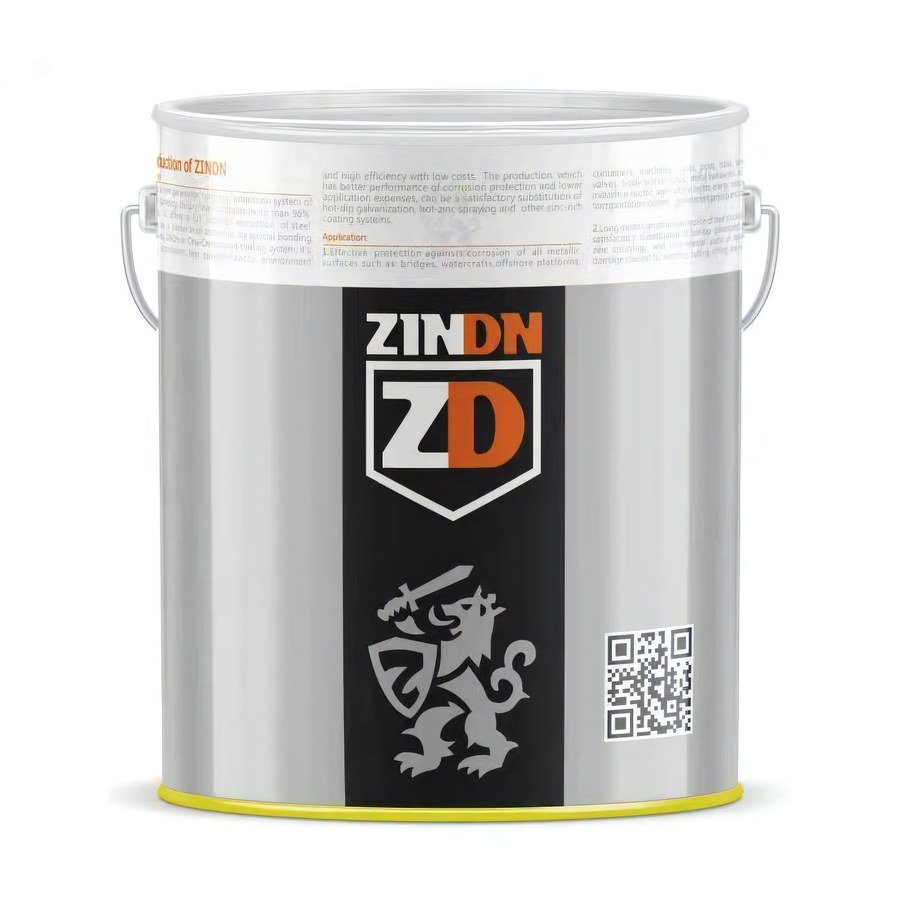
ZD6315 High Solids Universal Epoxy Paint belongs to Epoxy. Two-component high solids anti-corrosive epoxy paint based on pure epoxy and polyamine adduct curing. Description: High Solids universal epoxy anti-corrosive primer, based upon pure epoxy technology. Suitable as a general-purpose pure epoxy primer in protective coating systems for multiple areas such as ballast water tanks, outer hull plating, freeboard, decks and superstructures. Parameters on this page: volume solids 83 ± 3%, dry film thickness 75/160/250 µm, theoretical spreading rate 3.32 m²/L.
Parameter source: ZINDN original Technical Data Sheet (TDS) \"ZD6315 High Solids Universal Epoxy Paint\"; values such as spreading rate are converted from TDS parameters and are for selection reference only.
The above content is compiled from the manufacturer's datasheet and this site's parameter tables. For selection, coating systems and lead times, pleaseContact Usfor confirmation.
This page carries the full TDS for this product, translated from the manufacturer's original document. No file download is needed; for an original-language copy, send an enquiry.
| Volume Solids | 83 ± 3% |
|---|---|
| Dry Film Thickness | 75/160/250 µm |
| Theoretical Spreading Rate | 3.32 m2/L |
| VOC | ~170 g/L (tested according to GB 30981-2020) |
| Density / Specific Gravity | 1.5 |
| Number of Components | Two-component |
| Thinner | X-500 |
| Mixing Ratio | A (base):B (curing agent) = 4:1 (by volume) |
| Colour / Appearance | Aluminium red, aluminium grey (and other aluminium-pigmented dark colours), other corresponding dark colours (without aluminium powder) and a limited range of light colours |
ZD6315 High Solid Universal Epoxy Coatings
Two-component high solids anti-corrosive epoxy paint based on pure epoxy and polyamine adduct curing. Description: High Solids universal epoxy anti-corrosive primer, based upon pure epoxy technology
● Universal pure epoxy primer system suitable for Ballast Tanks, Decks, Topside, Superstructure, Hull etc.
● Good abrasion resistance for dedicated areas of application
● Good adhesion to steel and galvanized steel and non-ferrous metal
● Good flow and wetting properties
● Cures even at temperatures down to -10°C (14°F)
● Suitable for touching up of weld seams and damages of epoxy coatings during construction
● Excellent recoat ability
● Can be overcoated with most alkyd-, chlorinated rubber-, vinyl-, epoxy- and two-component polyurethane coatings
● Suitable on wet blast cleaned substrates (damp or dry)
● Compatible with well-designed cathodic protection systems
| Marine Anti-corrosion | Suitable as a general-purpose pure epoxy primer in protective coating systems for multiple areas such as ballast water tanks, outer hull plating, freeboard, decks and superstructures. |
|---|---|
| Marine use | Universal pure epoxy primer system suitable for Ballast Tanks, Decks,Topside, Superstructure, Hull etc. |
| Industrial Protection | Can be used for anti-corrosion in atmospheric and immersion areas |
| Protective use | Suitable for atmospheric and immersion anti-corrosion area. |
Basic data(20o C)
| Colour | Aluminium red, aluminium grey (and other aluminium-pigmented dark colours), other corresponding dark colours (without aluminium powder) and a limited range of light colours. |
|---|---|
| Color | Aluminum gray, aluminum red brown (or other aluminum dark color),other darkcolor(non-aluminum colors) and limited light colors. |
| Gloss | Semi-gloss |
| Gloss | semi-gloss |
| Volume Solids | 83±3% |
| Volume solids | 83±3% |
| Mixed Density* (kg/L) | ~1.5 |
Mixed density (mixed kg/L) ~1.5* Density may vary with colour. *Density can be various due to different colors
Typical film thickness and theoretical spreading rate
| Minimum | Typical | Maximum | |
| Minimum | Typical | Maximum | |
| Dry Film Thickness (µm) Dry film thickness | 75 | 160 | 250 |
| Wet Film Thickness (µm) Wet film thickness | 90 | 193 | 301 |
| Theoretical Spreading Rate (m²/L) Theoretical spread rate(m²/L) | 9.03 | 5.19 | 3.32 |
| Theoretical Spreading Rate (m²/kg) | 6.02 | 3.46 | 2.21 |
| Practical Spreading Rate | Allowing for a suitable loss factor |
|---|
Practical spread rate: consider appropriated loss factor
| VOC Content as Supplied | ~170 g/L (tested according to GB 30981-2020) |
|---|---|
| VOC(supplied) | ~170g/L (follow GB30981-2020) |
| Application instructions | Application instruction. |
Immersion exposure
● Bare steel or steel with not approved zinc silicate shop primer: blast cleaned to ISO-Sa2½, blasting profile 30 - 75 µm (1.2 – 3.0mils)
● Steel with approved zinc silicate shop primer; weld seams and areas of damaged shop primer or breakdown should be blast cleaned to ISO-Sa2½, blasting profile 30 – 75 µm (1.2 – 3.0 mils) or power tool cleaned to SPSS-Pt3
● Previous coat must be dry and free from any contamination
● At freezing temperatures surface must be free from ice
● Bare steel; ISO 8501-3:2006 grade P2, with all edges treated to a rounded radius of minimum 2 mm (0.079 in) or subject to three passes grinding or at least equivalent process before painting
● Steel or steel with not approved zinc silicate shop primer: blast cleaned to ISO-Sa2½, blasting profile 30 - 75 µm (1.2 – 3.0mils)
● Sa 2½ according to ISO-8501-1 with a surface roughness of 30–75 µm (1.2–3.0 mils): [1] For intact shop primer with IMO-PSPC type approval certificate, no additional requirements; [2] For shop primer without IMO-PSPC type approval certificate, blast clean intact shop primer areas to Sa2 according to ISO-8501-1 and remove at least 70% of the shop primer film, while meeting a surface roughness of 30–75 µm (1.2–3.0 mils).
● Steel with approved zinc silicate shop primer; weld seams and areas of shop primer damage or break down should be blast cleaned to Iso-Sa 2½ blasting profile 30 – 75 µm (1.2 – 3.0 mils): [1] For shop primer with IMO type approval; no additional requirements; [2] For shop primer without IMO type approval; blast cleaned to ISO-Sa2 removing at least 70% of intact shop primer, blasting profile 30 – 75 µm (1.2 – 3.0 mils)
● Dust quantity on the surface to be coated must not exceed rating "1" for dust size class "3", "4" or "5" (ISO 8502-3-2017). Lower dust size classes (“1” and/or “2”) to be removed if visible without magnification
Atmospheric exposure conditions
● Steel; blast cleaned to ISO-Sa2½, blasting profile 30 - 75 µm (1.2 – 3.0 mils) or according to ISO-St3
● Shop primed steel; pretreated to SPSS-Pt3
● Galvanized steel must be free from grease, salts and any contamination
● Galvanized steel must be sweep blasted or otherwise roughened
● Substrate temperature during application and curing should be above -10°C (14°F)
● Substrate temperature during application and curing down to -10 °C (14 °F) is acceptable; however, curing to hardness takes longer. Complete resistance will be reached when the temperature increases.
● During application and curing, ensure substrate temperature is at least 3 °C (5 °F) above dew point.
● Substrate temperature during application and curing should be at least 3°C (5°F) above dew point
● Relative humidity during application and curing should not exceed 85%
● Mixing two components by stirring homogeneous by electric stirrer to suitable application viscosity by adding suitable thinner. Must be applied within pot life once mixed.
● Adding too much thinner results in reduced sag resistance and slower cure
● Thinner should be added after mixing the components
● Thinner/cleaner:Thinner X-500
● Mixing ration(by volume): A(main):B(cure agent)=4:1
● Mixing ratio(by weight):A(main): B (cure agent)=6.44:1
● Induction time: no
| Pot Life after Mixing: 4 h at 10 °C (suitable application viscosity: 32 h at 10 °C) | 1.5 h at 30 °C |
|---|---|
| Pot life1 0(s°Cuitable applica2t0io°Cn viscosity) | 30°C |
Application
| Application Methods | Airless spray and air spray are recommended; brush and roller are recommended only for touch-up, small-area application or repair. |
|---|
Application methods(recommended): airless spray, air spray, brush/roller only for stripecoat and touch up for small areas
| methods | Unit | Airless spray | Air spray | Brush/roller |
| Nozzle orifice | mm | 0.43~0.53 | 1.5~2.5 | —— |
| Nozzle pressure | kg/cm² | 150~200 | 3~4 | —— |
| Thinner % | % | 0~10 | 10~20 | 5~10 |
Drying/cure/overcoating interval
| Substrate Temperature | -10°C | 0°C | 20°C | 30°C | |
| Touch Dry | 48 h | 20 h | 4 h | 2 h | |
| Dry to Handle | 96 h | 36 h | 8 h | 4 h | |
| Full Cure | 28 days | 21 days | 14 days | 7 days | |
| Minimum Overcoating Interval (self) | 60 h | 24 h | 6 h | 3 h | |
| Maximum Overcoating Interval (self) | Direct Sunlight Exposure | 30 days | 14 days | 7 days | |
| interval (self) | Non-direct Sunlight Exposure | 60 days | 45 days | 30 days | |
Note: The above data are measured under good ventilation, typical film thickness and 75% relative humidity, for reference only. Actual drying times and overcoating intervals may vary depending on film thickness, ventilation, humidity, previous coat, early handling requirements and mechanical strength.
| Note | above are typical data based on good ventilation, typical film thickness and relativehumidity 75%, just for reference only. |
|---|
Real drying time base on impact of overcoating interval, film thickness, ventilation,humidity, under coat, ahead of loading and de-loading and mechanical requirement etc.
Immersion only allowed after full cure.
Typical system
| Preceding coat | Blast to Sa2.5, or power-tool to St3, or inorganic zinc silicate shop primer or similar. Preceding & Consequent coat:blasted to Sa2.5 or power tool to St 3 or approvedinorganic zinc shop primer. |
|---|---|
| Subsequent coat | ZINDN approved epoxy or polyurethane topcoat, fluorocarbon topcoat, etc. |
| Consequent coat | ZINDN approved epoxy coatings,polyurethane, fluorocarbon topcoatetc. |
Must use approved thinner, and approved other coatings as primer or topcoat, otherwise will affect the quality.
Like other epoxies, long-term exterior exposure may cause chalking and colour change.
Same as common epoxy coating, it will be discoloration and chalking when long-termdirect to sunlight.
Whitening, stickiness and the consequent coat poor adhesion can happen once thesudden condensation, temperature drop down when during the application or afterapplication.
Package, storage and shelf liePackage size
| Components | A (base) | B (curing agent) |
| Container size | 20 L | 4 L |
| Package size (weight) | 25.1 kg | 3.9 kg |
| Package size (volume) | ~16 L | ~4 L |
Flash point: >25 °C. Storage conditions: containers must be kept well sealed and stored in accordance with national regulations. The storage environment should be dry, cool, well ventilated and away from heat and fire. Pack Storage condition:must follow national rules. Should be dry, cool, good ventilation andaway heat and fire. The containers should be well sealed.
| Shelf life | Shelf life is 1 year under good storage conditions; thereafter, test before use. |
|---|---|
| Shelf life | 1year at good storage condition. After should be checked and approvedbefore use |
This product contains flammable materials; site safety must comply with the relevant national or local regulations. Read the safety labels on the packaging and the product Safety Data Sheet (MSDS).
Avoid inhaling solvent vapours and spray mist, avoid contact of paint with skin and eyes, and do not swallow the product. Take the necessary precautions and protective measures for fire prevention, explosion prevention and environmental protection. Use only in well-ventilated conditions. In confined or poorly ventilated areas, provide forced ventilation.
Waste disposal must comply with the relevant national or local regulations.
Health, Safety and EnvironmentThis product contains flammable components; the application site has to meet nationalsafety and local government requirement. More details please read and follow materialsafety data sheet (MSDS)Avoid inflating solvent vapor and paint mist, avoid contacting skin and eyes, forbiddenswallowing, must have necessary to have prevention and protection for fire, explorationand environment protection solutions. Application under good ventilation, providesufficient ventilation when in narrow space and in non-good air flow.
Waste treatment has to follow national and local government requirement.
Declare
The product documents and data based our experiments and application experience, usefor application instruction. The application condition is usually out of our control, we onlywarranty of product quality itself. ZINDN keeps the authority to modify for improvementwithout pre-notification to customers.
| Version information | Revised in July 2025. This version supersedes previous versions. Other language versions are subject to the Chinese technical data sheet. |
|---|---|
| Version | Revised in July 2025. This version supersedes previous versions. Other language versions are subject to the Chinese technical data sheet. The ZINDN trademark and related marks are the property of ZINDN Group; no individual or organization may use them without permission. |
The ZINDN Logo,and ZINDN remarks are properties of group of companies, all thirdparties are not allowed to use without permit.
Information is subject to the manufacturer's latest version; the manufacturer's latest TDS prevails.
The technical parameters on this page are taken from the product's original manufacturer technical datasheet, the copyright of which belongs to the manufacturer. If a rights holder considers the presentation inappropriate, contact us for verification and handling.
For more Q&A on selection, application, acceptance and defect diagnosis, seeFAQsection.
Packaging specifications and batch lead times are subject to actual availability. PleaseContact Uscontact us for project-based calculation.