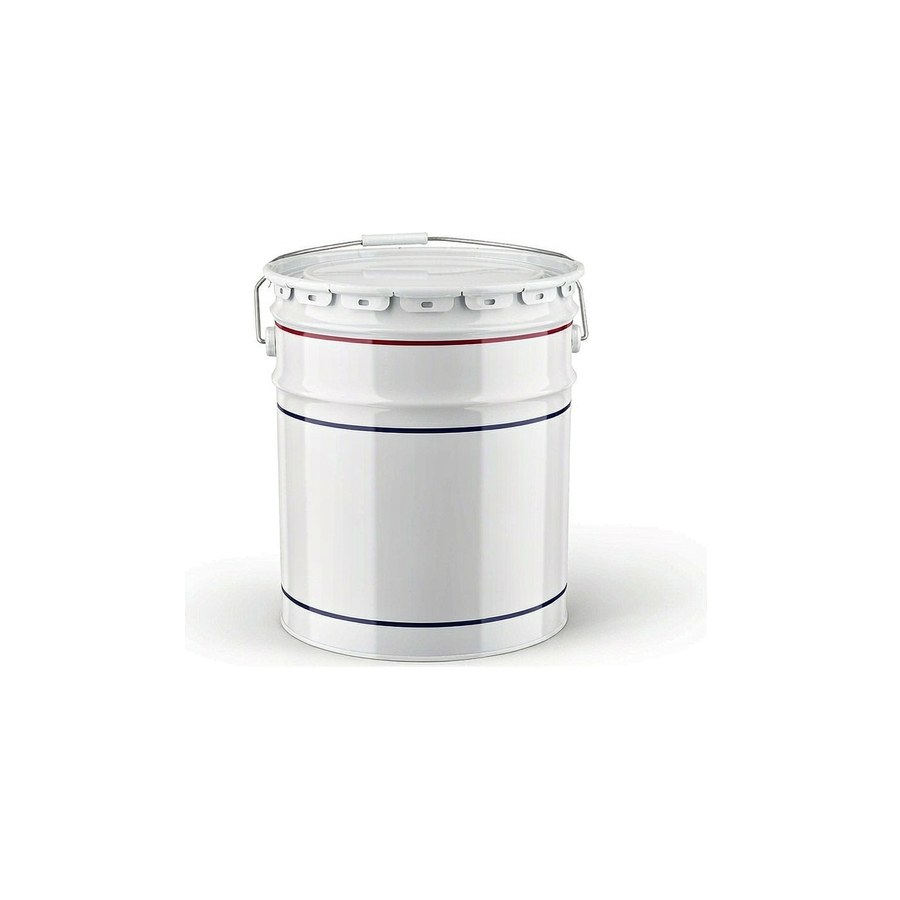
ZIEP216 Waterborne Epoxy Zinc-rich Primer is a zinc-rich primer in a waterborne coating system. It is used for corrosion protection of steel structure surfaces under mild to severe atmospheric corrosion environments and is widely applied in marine, container, port machinery, petrochemical, pipeline, metallurgy, power and other industries. Water is the dispersion medium; the product is non-flammable and non-explosive, can be diluted with water and coating tools can be cleaned with water, application is pollution-free and transport and storage are safe and convenient. Parameters on this page: dry film thickness 75 µm, theoretical spreading rate 2.80 m²/kg, number of components: three.
Parameter source: OSAKA manufacturer's Technical Data Sheet (TDS) "ZIEP216 Waterborne Epoxy Zinc-rich Primer (Three-component)"; values such as spreading rate are converted from TDS parameters and are for product selection reference only.
The above content is compiled from the manufacturer's datasheet and this site's parameter tables. For selection, coating systems and lead times, pleaseContact Usfor confirmation.
This page carries the full TDS for this product, translated from the manufacturer's original document. No file download is needed; for an original-language copy, send an enquiry.
| Volume Solids | 60% |
|---|---|
| Dry Film Thickness | 75 µm |
| Theoretical Spreading Rate | 2.80 m²/kg |
| VOC | — |
| Density / Specific Gravity | 2.85 kg/L |
| Number of Components | Three-component |
| Thinner | Clean fresh water |
| Mixing Ratio | Component A (base) : Component B (curing agent) : Component C (zinc dust) = 5:3:22 |
| Colour / Appearance | Grey |
A waterborne three-component epoxy zinc-rich primer using lamellar zinc dust as anticorrosive pigment, with zinc content in the dry film greater than 80%; the film is tough with strong mechanical properties, provides good cathodic protection to locally damaged areas, and offers good water resistance, oil resistance and salt spray resistance. Water is the dispersion medium; the product is non-flammable and non-explosive, can be diluted with water and coating tools can be cleaned with water, application is pollution-free and transport and storage are safe and convenient.
For corrosion protection of steel structures in mild to severe atmospheric corrosion environments, widely used in shipbuilding, containers, port machinery, petrochemical, pipeline, metallurgy and power industries.
| Colour | Grey |
|---|---|
| Volume Solids | 60% |
| Typical dry film thickness | 75 µm |
| Theoretical Spreading Rate | 2.80 m²/kg |
| Practical Spreading Rate | Allowing a suitable loss |
| Mixing | Add the zinc dust to Component A while stirring until uniformly mixed, then add Component B hardener and stir until uniform. |
|---|---|
| Mixing Ratio | Component A (base) : Component B (curing agent) : Component C (zinc dust) = 5:3:22 |
| Airless spray | Recommended: tip size 0.43–0.53 mm; spray pressure ≥ 15.5 MPa |
| Conventional spray | Recommended: nozzle size 1.3–1.5 mm; output pressure 0.3–0.4 MPa |
| Brush | Recommended for touch-up or small-area application. Take care to achieve the specified dry film thickness. |
| Roller application | Recommended for small-area application. Take care to achieve the specified dry film thickness. |
| Thinner | Clean fresh water |
| Paint equipment cleaner | Clean fresh water |
| Pot life | 23 °C: 4 h |
| Drying Time | |||
| Substrate Temperature | Touch dry (min) | Hard dry (h) | Minimum recoat interval (h) |
| 23°C | 30 | 12 | 6 |
Note: ventilation, temperature, relative humidity and film thickness all affect drying and curing times. The data above are measured under well-ventilated conditions with relative humidity <75%.
| Storage | Store in a cool, dry environment |
|---|---|
| Shelf life | 1 year |
| Packaging Specifications | A: 5 kg in a 5 L container; B: 3 kg in a 4 L container; C: 22 kg in an 8 L container |
| density | 2.85 kg/L |
All surfaces to be coated must be kept clean, dry and free of contamination. Before application, assess and prepare surfaces in accordance with ISO 8504:2000; remove oil and grease by solvent cleaning per SSPC-SP1; blast clean steel surfaces to Sa 2.5 or clean with power tools to St 3.
Subsequent coat: epoxy, polyurethane, acrylic and similar coatings.
Information is subject to the manufacturer's latest version; the manufacturer's latest TDS prevails.
The technical parameters on this page are taken from the product's original manufacturer technical datasheet, the copyright of which belongs to the manufacturer. If a rights holder considers the presentation inappropriate, contact us for verification and handling.
For more Q&A on selection, application, acceptance and defect diagnosis, seeFAQsection.
Packaging specifications and batch lead times are subject to actual availability. PleaseContact Uscontact us for project-based calculation.