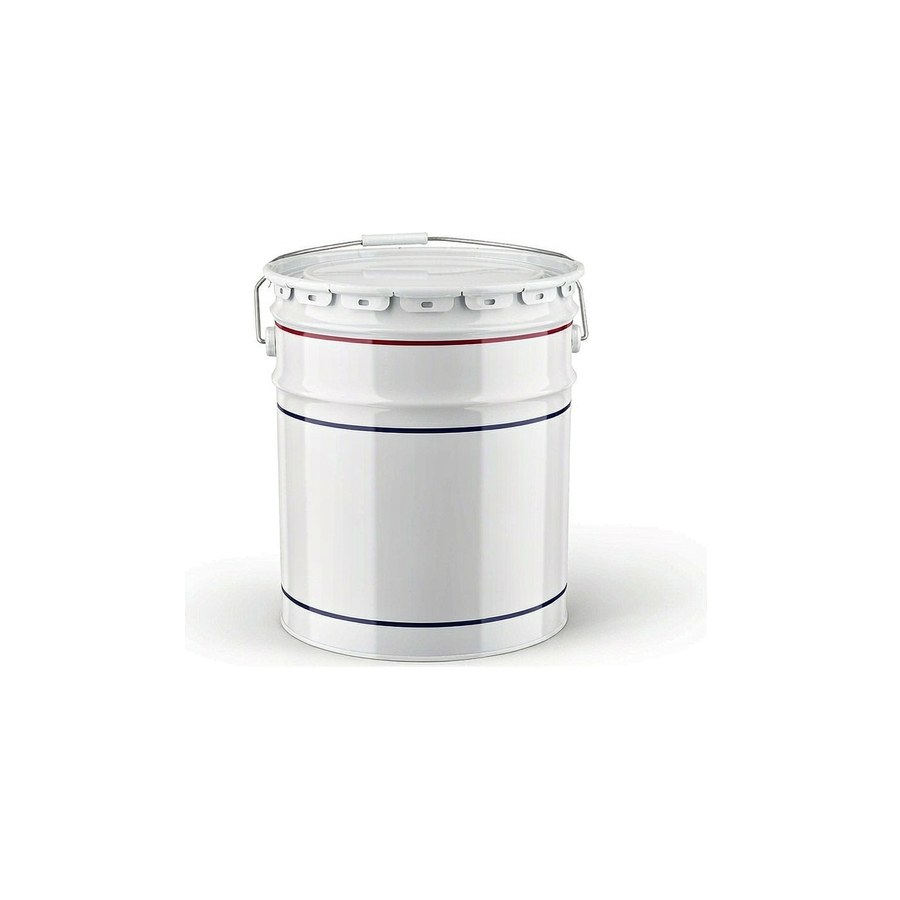
AL069 Water-borne Alkyd Anti-corrosive Primer is a water-borne coating used as a primer. Fields: fans, axles, automotive chassis, guardrails, hardware and other light industrial metal products. Single-component water-borne air-drying anti-corrosive primer; film formation mechanism is oxidative drying and curing; strong ventilation accelerates coating curing; water is the dispersion medium; safe, environmentally friendly and flame retardant; excellent adhesion to steel substrates and good corrosion resistance. Parameters on this page: DFT 30–50 µm, theoretical spreading rate 6.99 m²/kg, number of components single-component.
Parameter source: OSAKA original technical data sheet (TDS) "AL069 Water-borne Alkyd Anti-corrosive Primer"; values such as spreading rate are converted from TDS parameters and are for selection reference only.
The above content is compiled from the manufacturer's datasheet and this site's parameter tables. For selection, coating systems and lead times, pleaseContact Usfor confirmation.
This page carries the full TDS for this product, translated from the manufacturer's original document. No file download is needed; for an original-language copy, send an enquiry.
| Volume Solids | 43% |
|---|---|
| Dry Film Thickness | 30–50 µm |
| Theoretical Spreading Rate | 6.99 m²/kg |
| VOC | — |
| Density / Specific Gravity | 1.23 kg/L |
| Number of Components | One-component |
| Thinner | Clean fresh water |
| Mixing Ratio | Single pack |
| Colour / Appearance | Grey or iron red |
Single-component water-borne air-drying anti-corrosive primer, film formation mechanism is oxidative drying and curing, strong ventilation accelerates coating curing, water as dispersion medium, safe, environmentally friendly and flame retardant, excellent adhesion to steel substrates and good corrosion resistance.
For fans, axles, automotive chassis, guardrails, hardware and other light industrial metal products.
| Colour | Grey or iron red |
|---|---|
| Volume Solids | 43% |
| Typical dry film thickness | 30–50 µm |
| Theoretical Spreading Rate | 6.99 m²/kg, calculated at 50 µm DFT. |
| Practical Spreading Rate | Allowing a suitable loss |
| Mixing Ratio | Single pack |
|---|---|
| Airless spray | Recommended: nozzle tip size 0.43–0.53 mm; output pressure 12–15 MPa |
| Conventional spray | Recommended: nozzle size 1.3–1.5 mm; output pressure 0.3–0.4 MPa |
| Brush | Recommended for touch-up or small-area application. Take care to achieve the specified dry film thickness. |
| Roller application | Recommended for small-area application. Take care to achieve the specified dry film thickness. |
| Thinner | Clean fresh water |
| Paint equipment cleaner | Clean fresh water |
| Pot life | Unlimited |
| Drying Time | |||
| Substrate Temperature | Touch dry (h) | Hard dry (h) | Minimum recoat interval (h) |
| 5°C | 2 | 48 | |
| 23°C | 1 | 24 | |
| 35°C | 0.5 | 12 | |
Note: ventilation, temperature, relative humidity and film thickness all affect drying and curing times. The data above are measured under well-ventilated conditions with relative humidity <75%.
| Storage | Store in a cool, dry environment |
|---|---|
| Shelf life | 6 months |
| Packaging Specifications | 20 kg in a 20 L container |
| density | 1.23 kg/L |
Steel structure surfaces: blast clean to Sa2.5 or power tool clean to St3 in accordance with ISO 8501:2007. Surfaces clean, dry and free from contaminants.
Subsequent coat: alkyd coatings or other compatible coating systems verified by testing per customer requirements.
Information is subject to the manufacturer's latest version; the manufacturer's latest TDS prevails.
The technical parameters on this page are taken from the product's original manufacturer technical datasheet, the copyright of which belongs to the manufacturer. If a rights holder considers the presentation inappropriate, contact us for verification and handling.
For more Q&A on selection, application, acceptance and defect diagnosis, seeFAQsection.
Packaging specifications and batch lead times are subject to actual availability. PleaseContact Uscontact us for project-based calculation.