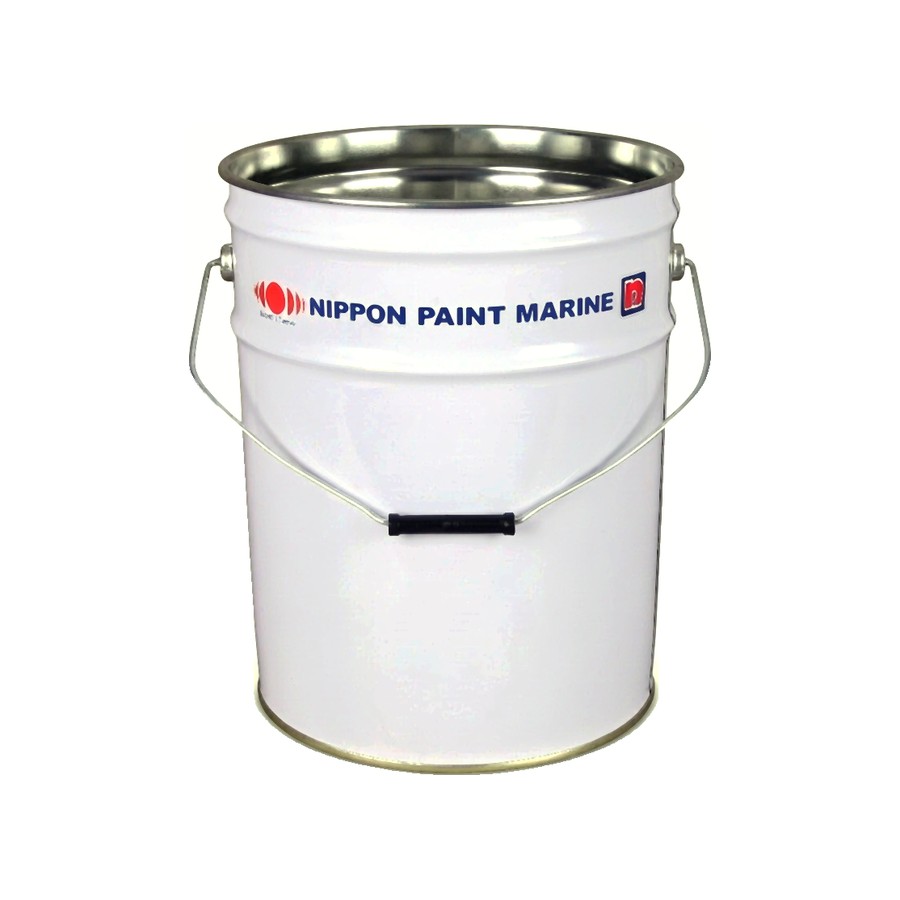
HI-CATE 1715 Inorganic Zinc-rich Primer is a zinc-rich primer. This primer can be used as the primer of a long-life high-performance system, recommended for corrosion protection of new steel structures in moderate or severe corrosion environments, such as bridges, petrochemical, power plants, offshore equipment and port machinery. Meets the composition requirements of Type I of HG/T 3668-2009, Grade 1 of SSPC Paint 20 and ISO 12944-5, with good heat resistance, solvent resistance and excellent cathodic protection, and excellent anti-corrosion performance. 505 g/L. Surfaces to be coated shall be clean, dry and free from contamination. Parameters on this page: volume solids 63 ± 2%, dry film thickness 50–100 µm, theoretical spreading rate 0.32 kg/m².
Source: NIPPON INDUSTRIAL original technical data sheet (TDS) "HI-CATE 1715 Inorganic Zinc-rich Primer"; spreading rate and other values are converted from TDS parameters and are for selection reference only.
The above content is compiled from the manufacturer's datasheet and this site's parameter tables. For selection, coating systems and lead times, pleaseContact Usfor confirmation.
This page carries the full TDS for this product, translated from the manufacturer's original document. No file download is needed; for an original-language copy, send an enquiry.
| Volume Solids | 63 ± 2% |
|---|---|
| Dry Film Thickness | 50-100µm |
| Theoretical Spreading Rate | 0.32 kg/m² |
| VOC | 505 g/L |
| Density / Specific Gravity | 2.70kg/L |
| Number of Components | Two-component |
| Thinner | 0971 Thinner |
| Mixing Ratio | Base : zinc dust = 1:3 (by weight) |
| Colour / Appearance | Grey |
For more Q&A on selection, application, acceptance and defect diagnosis, seeFAQsection.
HI-CATE 1715 Inorganic Zinc-rich Primer is a two-component, fast-drying, moisture-curing inorganic zinc silicate coating
, meeting the composition requirements of Type I of HG/T 3668-2009, Grade 1 of SSPC Paint 20 and ISO 12944-5, with good heat resistance, solvent resistance and excellent cathodic protection, and excellent anti-corrosion performance. Its zinc dust complies with ASTM D520 Type II.
This primer can be used as the primer of a long-life high-performance system, recommended for corrosion protection of new steel structures in moderate or severe corrosion environments, such as bridges, petrochemical, power plants, offshore equipment and port machinery.
| Colour | Grey |
|---|
| Solids content (by volume) | 63±2% |
|---|---|
| Density | 2.70kg/L |
| VOC | 505 g/L. Surfaces to be coated shall be clean, dry and free from contamination. Surface assessment and cleaning shall refer to ISO 8504. Oil and |
Remove oil and grease in accordance with SSPC-SP1 solvent cleaning.
Blast cleaning: blast to Sa 2½ (ISO 8501-1:2007) or SSPC-SP6 (or SSPC-SP10 for better results). If the blasted surface has oxidised before coating, it must be re-treated to the specified standard. Surface defects exposed after blasting shall be treated by grinding, filling or other suitable means. Recommended surface roughness of 50 µm or above.
Repair of damaged areas: damaged areas shall be blast cleaned to Sa 2½ (ISO 8501-1:2007) or SSPC-SP6 (blast to SSPC-SP10 for ideal performance). Repair application of HI-CATE 1715 Inorganic Zinc-rich Primer may proceed only after surface preparation reaches the specified requirement. For ambient-temperature service where local blasting is not possible, power-tool cleaning to SSPC-SP11 without polishing, and repair with the recommended epoxy zinc primer, may be used, but not for high-temperature service.
Before applying HI-CATE 1715 Inorganic Zinc-rich Primer, ensure the surface to be coated is clean and dry, and apply within the specified recoat interval (refer to the relevant product application instructions).
Other surfaces: if this coating is to be applied to other surfaces, consult the local Nippon Paint company for further information.
Avoid application when the substrate temperature is above 45 °C or condensation is possible; the steel temperature must be at least 3 °C above the ambient dew point. For ideal film performance, the curing temperature shall be above 10 °C and humidity above 65%. When relative humidity is persistently below 65%, fresh-water spraying helps film curing and formation.
| Mixing ratio | Base : zinc dust = 1:3 (by weight) |
|---|
Before mixing the base and zinc dust, shake the base in the plastic drum, pour it into a steel drum and stir evenly, then slowly add the zinc dust and stir until uniform. Keep stirring during spraying to avoid zinc dust settling. Strain through an 80–100 mesh sieve if necessary.
| Pot life | 4 h (25 °C) |
|---|
Once mixed, use within the pot life.
| Theoretical spreading rate | 0.32 kg/m² (based on 75 µm dry film) |
|---|---|
| Thinner | 0971 Thinner: the thinning quantity shall not exceed the limits permitted by local regulations. |
Brush is suitable for small-area repair; roller application is not recommended; air spray and airless spray may be used, airless spray being the normally ideal method. Note that the specified dry film thickness must be achieved, but exceeding 125 µm is not recommended, otherwise the risk of cracking increases.
| Airless Spray | Nozzle size: 0.017" – 0.023"; nozzle pressure: 120–150 kg/cm² |
|---|---|
| Typical film thickness | 50–100 µm dry film : 79–158 µm wet film. Drying time |
| Substrate Temperature | 10°C | 25°C | 40°C |
| Touch dry time | 1h | 0.5h | 0.2h |
| Hard dry time | 2h | 1h | 0.5h |
| Minimum recoat time | 48h | 24h | 12h |
| Maximum recoat time* | - | ||
Note: the above recoat times apply only to the matching sealer and subsequent system coats, not to self-overcoating.
The data above are for reference only; the recoat time of this product is affected by conditions such as film thickness and ventilation, and especially by the humidity during curing. Therefore, artificial water spraying should be used as appropriate during curing to accelerate curing.
Before overcoating, perform a solvent rub test per ASTM D4752; only after confirming the film is fully cured may the subsequent coat be applied per the procedure.
When the film has been exposed outdoors too long, or the surface is smooth or contaminated, recoat adhesion is adversely affected; therefore the film surface must be abraded, sweep-blasted or high-pressure water jetted to ensure sufficient adhesion.
The following intermediate coats/topcoats are recommended for use with HI-CATE 1715 Inorganic Zinc-rich Primer:
Intermediate Coat
Topcoat
Select the coating system according to different needs; refer to the product manual or contact the local Nippon Paint company for professional guidance.
| Unit weight | Base packaging size | Base weight | Zinc dust packaging size | |
| 25kg | 6.25kg | 10L | 18.75kg | 18L |
Shelf life (from production date): base 6 months (25 °C)
Zinc dust: 12 months (25 °C). Store per national regulations. The product shall be stored sealed in a dry, cool, well-ventilated warehouse, away from heat sources and sources of ignition. Excessive temperature shortens the shelf life and may cause the paint to gel in the can. The above are minimum shelf lives; after expiry, testing is required to determine whether continued use is possible.
▪ For professional use only. Refer to the safety information on the packaging and the Safety Data Sheet (SDS) before use.
The above information is based on laboratory tests and application experience. However, since actual use is affected by many factors that cannot be foreseen or controlled, we assume no application responsibility. Read this datasheet carefully, and contact Nippon Paint before using the product to confirm whether this datasheet is the latest version.
We reserve the right to make changes without prior notice.
Information is subject to the manufacturer's latest version; the manufacturer's latest TDS prevails.
The technical parameters on this page are taken from the product's original manufacturer technical datasheet, the copyright of which belongs to the manufacturer. If a rights holder considers the presentation inappropriate, contact us for verification and handling.
Packaging specifications and batch lead times are subject to actual availability. PleaseContact Uscontact us for project-based calculation.