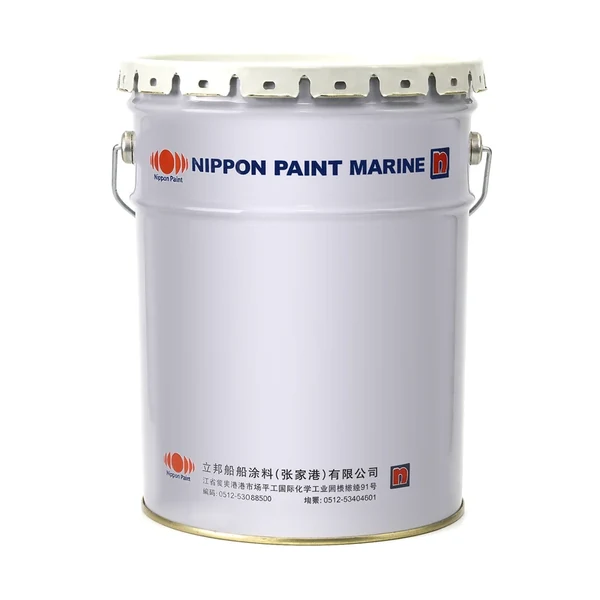
NOA PC700 antifouling belongs to antifouling coatings. The coating system is available in SI type, which lets a painter visually confirm that the correct film thickness (wet/dry) has been achieved during application, and non-SI type. Parameters on this page: volume solids 75 ± 2%, dry film thickness 100-150 µm, theoretical spreading rate 7.5 m²/L.
Source: NIPPON MARINE original technical data sheet (TDS) "NOA PC700 Antifouling"; spreading rate and other values are converted from TDS parameters and are for selection reference only.
The above content is compiled from the manufacturer's datasheet and this site's parameter tables. For selection, coating systems and lead times, pleaseContact Usfor confirmation.
This page carries the full TDS for this product, translated from the manufacturer's original document. No file download is needed; for an original-language copy, send an enquiry.
| Volume Solids | 75 ± 2% |
|---|---|
| Dry Film Thickness | 100-150 µm |
| Theoretical Spreading Rate | 7.5 m²/L (DFT 100 µm) |
| VOC | 211 g / L as supplied |
| Density / Specific Gravity | 1.49 ~ 1.59 |
| Number of Components | Two-component |
| Thinner | NIPPON MARINE THINNER 600 / NIPPON … |
| Mixing Ratio | BASE 88 / HARDENER 12 |
| Colour / Appearance | Buff 〔SI〕 |
A two-pack phenol / novolac epoxy designed for cargo oil tanks loaded with petroleum and chemical products. It offers superior resistance to petroleum products, solvents, water and chemical attack. It protects inner cargo oil tanks from corrosion and prevent cargoes from contaminants. And then it enables to ease tank cleaning during operation. The coating system is applicable from SI type which enables a painter to visually confirm that the correct film thickness (wet / dry) has been achieved during application process and non-SI type. The coating is fully compliant with IMO Performance Standard for Protective Coatings for cargo oil tanks of crude oil tankers.
| Suitable Use | Anti-corrosive coating for cargo oil tanks, cargo tanks of product carrier |
|---|---|
| Type | Phenol / Novolac epoxy |
| Colour | Buff 〔SI〕 |
| Gray, Red oxide | 〔Non-SI〕 |
| Gloss | Flat |
| Volume Solids | 75 ± 2 % (ISO3233:1998) |
| Dry Film Thickness | 100 ~ 150 µm |
| Approx. Wet Film Thickness | 133 ~ 200 µm |
| Theoretical Coverage | 7.5m²/L (DFT 100 µm) |
| Specific Gravity | BASE : 1.57 ~ 1.67 |
| HARDENER | 0.93 ~ 1.03 |
| Mixed paint | 1.49 ~ 1.59 |
| Drying Time | Surface Dry 11/2 hours (10°C) 40 minutes (20°C) 20 minutes (30°C) |
(10°C) 21 days (20°C) 15 days (30°C) 4 days (20°C)
| (DFT 100 µm) | Dry Hard | 18 hours (10°C) 12 hours (20°C) | 8 hours (30°C) |
| Interval before Overcoating | Min. | 18 hours (10°C) 12 hours (20°C) | 8 hours (30°C) |
| (by self) | Max. (1) | 28 days | |
| Max. (2) | 7 days (10°C) | 3 days (30°C) |
※ Refer to Note (7).
| Minimum time before loading | 20 days (10°C) 10 days |
|---|---|
| (20°C) | 5 days (30°C) |
| Min. DFT | 80 µm Film thickness shall be controlled as close as NDFT which should be evaluated by the 90 / 10 rule in accordance with PSPC 2.8. |
| Max. DFT | 1,000 µm Maximum dry film thickness is total thickness of coating system. |
| Steel Preparation | Use in accordance with our standard painting manual. Where necessary, remove weld spatter, smooth weld seams and remove sharp edges by rounding to a minimum radius of 2mm or subjecting to three pass grinding technique or at least equivalent process. |
|---|---|
| Surface Cleaning | All surfaces to be coated should be clean, dry and free from contamination. |
High pressure fresh water wash or fresh water wash, as appropriate, and remove all oil / grease, soluble contaminants and other foreign matters.
| Water soluble salts limit equivalent to NaCl : | ≦50 mg / m2 of sodium chloride |
|---|---|
| Shop Primers | Approved shop primers, compatible with NOA |
PC 700 must be applied in pressure water washing or equivalent method.
Welding part, corroded and damaged area to the shop primer must be cleaned by
| abrasive blasting to Sa 21/2 (ISO8501-1 | 2007) Non approved shop primers must be cleaned by abrasive blasting to Sa 2 (ISO8501- 1 :2007) and at least 70% of the intact shop primer should be removed. |
|---|
| abrasive blasting to Sa 21/2 (ISO8501-1 | 2007) The surface profile on any areas where abrasive blasting has been carried out must be |
|---|---|
| in the range of 30 - 75 µm (ISO8503-1/2 | 1988) In case that NOA PC 700 is to be applied to cargo oil tanks of product carriers, Intact shop primed surface shall be cleaned by abrasive blasting to Sa 21/2 (ISO8501- |
| 1 | 2007). |
Welding part and damaged area to shop primer shall be cleaned by abrasive blasting to
| Sa 21/2 (ISO8501-1 | 2007). |
|---|
Burnt part and corroded area to shop primer shall be cleaned by abrasive blasting to Sa
| 21/2 (ISO8501-1 | 2007). |
|---|---|
| Repair | NOA PC 700 can be sprayed immediately after repair coating. The specified max. |
| coating & | overcoating interval shall be maintained. When exceeding the specified overcoating |
| touching up | intervals, surface to be overcoated, should be roughened with power-tool before application. |
| After Erection | Erection joint welds and adjacent areas must be abrasive blasted to Sa 21/2 (ISO8501 |
| -1 | 2007) or power tool cleaned to St 3 (ISO8501-1 :2007). |
For inner bottom Damages, up to 20% of the area to be coated, shall be prepared with power tool to St 3 (ISO8501-1 : 2007). Contiguous damages over 25sqm or over 20% of the area to be coated, shall be abrasive blasted to Sa 21/2 (ISO8501-1:2007).
For underdeck Damages, up to 3% of the area to be coated, shall be prepared with power tool to St 3 (ISO8501-1 : 2007). Contiguous damages over 25sqm or over 3% of the area to be coated shall be abrasive blasted to Sa 21/2 (ISO8501-1:2007).
| Mixing | Material is supplied in two components as a unit. Mix a complete unit in the proportions supplied. Once the units has been mixed it must be used within the specified pot life. |
|---|
(1) Agitate BASE with a power agitator.
(2) Combine HARDENER with BASE and stir thoroughly with power agitator.
| VOC Value | 211 g / L as supplied |
|---|---|
| Thinner | NIPPON MARINE THINNER 600 / NIPPON MARINE THINNER 615 (For China Regions) |
| Application Method | Airless Spray Tip range 0.43 ~ 0.53 mm |
| Output pressure | 150 ~ 220 Kg / cm2 |
| Brush / Roller | For touching up small areas and stripe-coating |
| Mixing Ratio by Weight | BASE 88 / HARDENER 12 |
| Pot Life After Mixing | 6 hours (10°C) |
| 3 hours (20°C) | 2 hours (30°C) Since pot life is shortened at high temperature, avoid mixing excessive amounts at one time under such conditions. |
| Stripe Coating | Due to the high volume solids of the product, stripe coating to the full specified film thickness may be easily achieved in two applications. However, the correct technique as outlined below must be used: 1. The roller or brush should be fully charged with paint for each application. |
A roller shall be used for scallops, rat-holes etc., but not for edges and welds.
2. Light pressure on the tool will deposit more paint to the area - repeated heavy movements will tend to spread the paint more thinly and also aerate the paint - this should be avoided.
3. In the case of rough 'return welds' in scallops, the fully charged tool should be pulled into the weld and a 'side to side' motion employed to ensure that the cavities are fully coated.
4. Generally, stripe coating should only be necessary in areas that are difficult to coat by spray such as rough up-hand welds, return welds, free edges, scallops, drain holes, air holes, behind angles, stiffeners and brackets, etc.
Although NOA PC 700 exhibits very good flexibility properties over other epoxy products, it is 'good painting practice' not to over-apply coatings on welds that will be subject to stress. Stripe coating should also be avoided in areas where multiple passes by spray may be applied, such as corners or welds on right- angled structure.
| Ambient condition | Max relative humidity : 85% |
|---|---|
| Min. steel temperature above Dew point | 3 °C |
| Min. applicable surface temperature | 5°C Unit Size |
| Japan | 20kg ( BASE 17.6kg, |
HARDENER 2.4kg )
| Worldwide : 16L | ( BASE 13.1L, HARDENER 2.9L ) Package may vary from country to country. |
|---|---|
| Flash Point | Base 32°C, HARDENER 28°C |
| Shelf Life | BASE 12 months under 25°C |
| ID Code | Buff BASE JFA358 |
| Red Oxide BASE | JFA143 |
| HARDENER | JFA700 |
Take precautions to avoid skin and eye contact (i.e. gloves, goggles, face masks, barrier creams etc.). Proper ventilation and protective measures must be provided during applications and drying to keep solvent vapour concentrations within safe limits. Prior to use, obtain, consult and follow the SDS for this product concerning health and safety information.
| 1) | The information contained in this sheet is liable to modification from time to time in light of experience and our policy of continuous product development. |
|---|---|
| 2) | Store the paints in paint store. |
| 3) | Discoloration (blackening ) may occur on the surface due to sulphide in cargoes. Its anti-corrosive performance is not adversely affected by the discoloration. |
| 4) | If half-dried painted surface is subjected to rain or dew, blooming or sweating may occur, with the surface turned to white. Rub the area lightly with a wire brush before painting. |
| 5) | For the applications, refer to our "Suitability Table of Cargoes for Loading" and "Application Procedure". |
| 6) | Paint application shall be done immediately after abrasive blasting. Small rusted parts, welding seam, burnt parts shall be thoroughly treated with power tool. |
| 7) | Max. interval depends on exposure condition of coating. To prevent coating from sun light, cover manholes etc. with awning and so on. In case that coating is exposed to sun light, Max (2) of interval shall be adopted. |
| 8) | Use products that comply with local regulations to clean the paint equipment. |
Data is subject to the manufacturer's latest version; in all cases the manufacturer's latest TDS prevails.
For more Q&A on selection, application, acceptance and defect diagnosis, seeFAQsection.