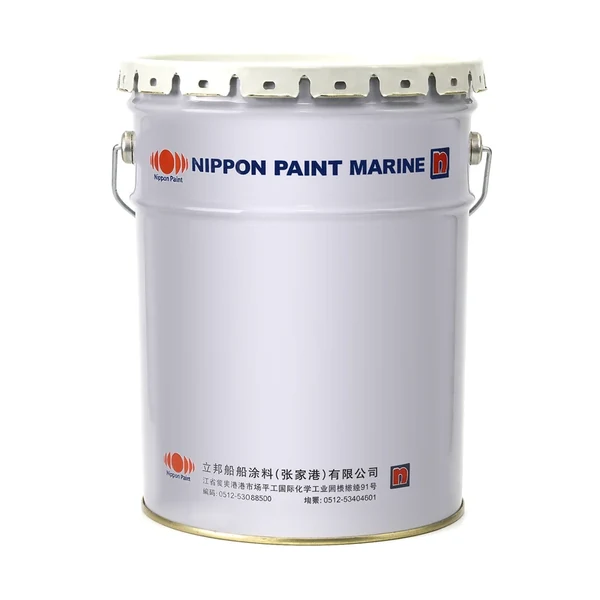
(2) Grey, iron red — without SI visible film thickness technology. Parameters on this page: volume solids 75 ± 2%; dry film thickness 320 µm (two coats); theoretical spreading rate 4.69 m²/L.
Parameter source: nippon-marin original technical data sheet (TDS) 'NOA 60HS LT'; values such as spreading rate are converted from TDS parameters and are for selection reference only.
The above content is compiled from the manufacturer's datasheet and this site's parameter tables. For selection, coating systems and lead times, pleaseContact Usfor confirmation.
This page carries the full TDS for this product, translated from the manufacturer's original document. No file download is needed; for an original-language copy, send an enquiry.
| Volume Solids | 75 ± 2% |
|---|---|
| Dry Film Thickness | 320 µm (two coats) |
| Theoretical Spreading Rate | 4.69 m²/L |
| VOC | 241 g/L |
| Density / Specific Gravity | 1.44~1.54 |
| Number of Components | Two-component |
| Thinner | THINNER 615 |
| Colour / Appearance | [SI technology] yellow, semi-transparent (corresponding contrast colours); [non-SI technology] grey, iron red |
| Gloss | Flat |
The manufacturer's datasheet for this model does not state the coating position or resin type, so it has not been assigned to the above categories. Browse similar products by category, orContact Usconfirm the coating system.
| Publication date | July 2024. NOA 60 HS-LTC. NOA 60HS-C Epoxy Winter Grade. A high-quality pure epoxy with excellent abrasion resistance, designed with full consideration of health, safety and environmental factors. It is multipurpose, particularly suitable for ship crude oil tanks, product oil tanks, ballast tanks and void spaces. The product is certified in accordance with IMO MSC.215(82) ballast tank PSPC and MSC.288(87) crude oil tanker cargo oil tank PSPC requirements, with type approval certificate. It has excellent drying and application performance at low temperatures. |
|---|
(1) Yellow — visual film thickness (SI) technology. This product has a unique patented visual film thickness (SI) technology that lets the applicator visually confirm correct film thickness during application by observing whether the film colour changes to a full bright yellow.
(2) Grey, iron red — without SI visible film thickness technology
| Recommended use | An anticorrosive coating for crude oil tanks, product tanks, ballast tanks, void spaces and other areas |
|---|---|
| Type | Pure Epoxy LTC |
| Colour | [SI technology] yellow, semi-transparent (corresponding contrast colours); [non-SI technology] grey, iron red |
| Gloss | Flat |
| Volume Solids | 75 ± 2% (ISO3233:1998) |
| Dry Film Thickness | 320 µm (two coats) |
| Wet Film Thickness | 427 µm |
| Theoretical Spreading Rate | 4.69 m²/L, 0.213 L/m² (dry film 160 µm) |
| density | Base 1.55~1.65 |
| Curing agent | 0.93~1.03 |
| After mixing | 1.44~1.54 |
| Drying Time | Surface Dry |
| 4 h | Hard dry (-5 °C) |
70 h (-5 °C)
| (160um) | 2 h (5 °C) |
|---|
24 h (5 °C)
| 1.5 h (10 °C) | 18 h (10 °C) |
|---|---|
| 1/2 h (25 °C) | 10 h (25 °C) |
Minimum; maximum
| Recoat interval | 70 h (-5 °C) | 12 days (-5 °C) |
| (self-recoat) | 24 h (5 °C) | 10 days (20 °C) |
| 18 h (10 °C) | 7 days (30 °C) | |
| 10 h (25 °C) | 4 days (40 °C) |
| Minimum interval before cargo loading/water filling | 14 days (-5 °C) |
|---|---|
| 10 days | (20°C) |
| 7 days | (30°C) |
| 4 days | (40°C) |
| Minimum dry film | 80 µm film thickness should be controlled near the nominal dry film thickness range, assessed according to the 90/10 rule of PSPC clause 2.8 |
| Maximum dry film | 1,800 µm maximum dry film refers to the total film thickness of the entire coating system |
Remove weld spatter, smooth welds, and grind sharp edges to a radius of at least 2 mm, or use the three-pass grinding technique or similar treatment.
All surfaces to be coated must be clean, dry and free of contaminants.
Wash with high-pressure fresh water or fresh water to remove all oil, grease, soluble salts and foreign matter.
| Soluble salt limit expressed as NaCl | ≤50 mg/m² sodium chloride. |
|---|
Dust of size classes “3”, “4” or “5” with a distribution rating of “1”.
| Finer dust visible on the surface to be coated without magnification must be removed (ISO 8502-3 | 1993) |
|---|
Type-approved shop primer compatible with NOA 60 HS-LTC, in accordance with MSC 215(82) and MSC.288(87) PSPC standards, blast cleaned to Sa 2.5
| (ISO8501-1 | 2007), with a surface profile in the range 30–75 µm (ISO 8503-1/2:1988). |
|---|
Tested shop primer: clean by sweep blasting, high-pressure water washing or other equivalent methods.
| Welded areas, if the shop primer is rusted or damaged, must be blast cleaned to Sa 2.5 (ISO 8501-1 | 2007) |
|---|---|
| Shop primer without type approval must be blast cleaned to Sa 2 (ISO 8501-1 | 2007), remove at least 70% of the intact shop primer. |
| Welded areas, if the shop primer is rusted or damaged, must be blast cleaned to Sa 2.5 (ISO 8501-1 | 2007). |
| The surface roughness of any blast-cleaned area should be in the range 30–75 µm (ISO 8503-1/2 | 1988). |
NOA 60 HS-LTC can be sprayed immediately after pre-coating, while remaining within the specified maximum overcoating interval. Once the maximum recoating interval is exceeded, the surface should be abraded by power tool before recoating.
Erection weld seams and adjacent areas must be blast cleaned to Sa 2.5 (ISO 8501-1:2007) or cleaned with power tools to St 3 (ISO 8501-1:2007).
Inner bottom
| Damage not exceeding 20% of the total area may be power-tool cleaned to St3 (ISO 8501-1 | 2007). |
|---|---|
| Where the connected damaged area exceeds 25 m² or more than 20% of the total tank area, blast cleaning to Sa2.5 (ISO 8501-1 | 2007) is required. Underside of deckhead |
| Damage not exceeding 3% of the total area may be power-tool cleaned to St3 (ISO 8501-1 | 2007). |
| Where the connected damaged area exceeds 25 m² or more than 3% of the total tank area, blast cleaning to Sa2.5 (ISO 8501-1 | 2007) |
The paint is supplied as a complete unit of two separately packaged components; mix in the supplied ratio.
Once mixed, use within the specified pot life.
(1) Stir the base with a power tool. (2) Pour the curing agent into the base and mix, stirring thoroughly with a power tool
| VOC | 241 g/L (GB/T 23985-2009) |
|---|---|
| Thinner | THINNER 615 |
Airless Spray
| Gun tip size | 0.53 ~ 0.79 mm (GRACO 521-531,621-631) |
|---|---|
| Spray fan angle | 45–55° (repair); 30–35° |
| Output pressure | 150 ~ 220 kg/cm². Brush/roller: for small-area repair and pre-coating only. |
Base 4.56 / curing agent 1
| 16 h (-5 °C) | 9 h (5 °C); 6 h (10 °C); 2.5 h (25 °C). At high temperatures, the pot life after mixing will shorten, so avoid mixing excessive quantities simultaneously under such conditions. |
|---|
The NOA 60 HS-LTC two-coat system should be applied as two pre-coats and two spray coats.
This product has high solids content; two touch-up coats achieve the specified film thickness. Use the following touch-up technique: 1. Load the brush or roller fully each time. Rollers may be used on scallop openings, rat holes and similar, but not on free edges or welds.
2. Apply light pressure for touch-up so more paint remains on the surface; repeated heavy pressure only spreads the paint thinly and aerates the film, which must be avoided as far as possible.
3. For rough, back-run welds at scallop openings, draw the loaded tool edge-to-edge across the weld so that paint penetrates the weld pores.
4. Pre-coating of difficult-to-spray areas is generally essential, such as rough welds, back-run welds, free edges, scallop openings, drain holes, air holes, dead corners, stiffeners and brackets.
Although NOA 60 HS-LTC has better flexibility than ordinary epoxy coatings, good painting practice should still be followed; do not apply too thickly over stressed welds. Avoid pre-coating in areas prone to spray overlap, such as corners or right-angle weld structures.
NOA 60 HS-LTC can be sprayed immediately after pre-coating, while remaining within the specified maximum overcoating interval.
| Environmental conditions | Maximum relative humidity 85% |
|---|---|
| Packaging sizes | Shelf life |
| Two-component | 20 L (base 16.4 L, curing agent 3.6 L) |
| Base | 12 months at 25 °C |
| Packaging may vary by place of production | Curing agent: 12 months at 25 °C |
| Base | 32 °C; curing agent: 25.5 °C. ID CODE |
|---|---|
| Yellow base | HFV358C |
| Grey base | HFV637C |
| Iron red base | HFV143C |
| Curing agent | HFL403C |
Take the necessary protective measures to avoid skin and eye contact (e.g. gloves, safety glasses, face shield, barrier cream).
Ensure adequate ventilation during application and drying to keep solvent vapour concentrations within safe limits.
Before use, refer to the health and safety information in the Safety Data Sheet (SDS) for this product.
Precautions: 1. The content of this product data sheet may be revised at any time as our experience grows and the product is further developed.
2. This product should be stored in a paint store.
3. Sulphides in ballast water and sewage may discolour the coating surface (blackening), but the anti-corrosion performance of the coating is not affected.
4. Before use, read and follow the Material Safety Data Sheet (MSDS) for this product.
5. Clean paint equipment with products that comply with local regulations.
Data is subject to the manufacturer's latest version; in all cases the manufacturer's latest TDS prevails.
For more Q&A on selection, application, acceptance and defect diagnosis, seeFAQsection.
Packaging specifications and batch lead times are subject to actual availability. PleaseContact Uscontact us for project-based calculation.