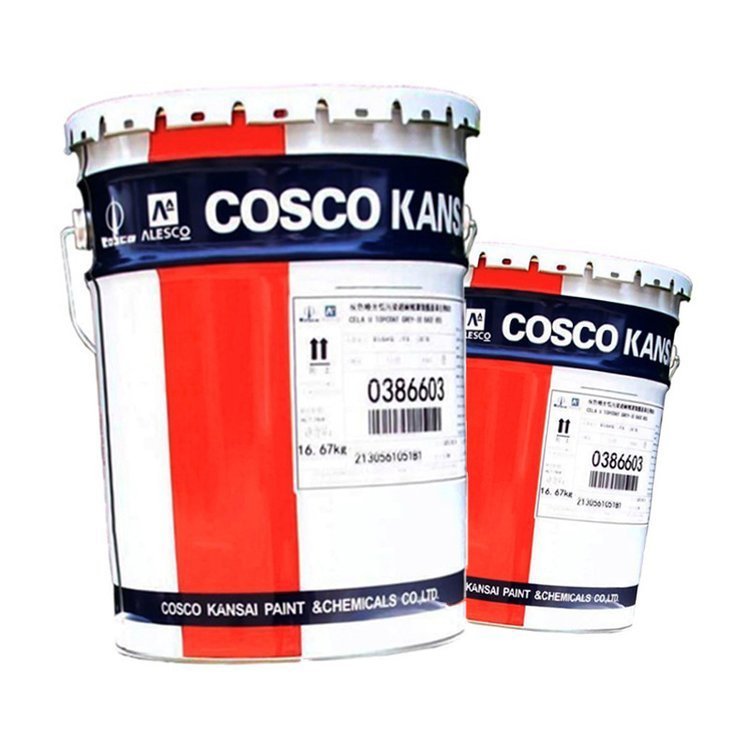
SHIN LLL 100 C Antifouling is an antifouling. Domestic service, ship bottom. An antifouling paint (hydrolytic decomposition). One-component coating. Hydrolytic decomposition silicon-contained polymer coatings. Outstanding antifouling applicability. Be suitable for domestic service. Parameters on this page: theoretical spreading rate 6.25 m²/L, number of components: one-component.
Parameter source: KANSAI original technical data sheet (TDS) for SHIN LLL 100 C Antifouling; spreading rate and other values are converted from TDS parameters and provided for product selection reference only.
The above content is compiled from the manufacturer's datasheet and this site's parameter tables. For selection, coating systems and lead times, pleaseContact Usfor confirmation.
This page carries the full TDS for this product, translated from the manufacturer's original document. No file download is needed; for an original-language copy, send an enquiry.
| Volume Solids | 50% |
|---|---|
| Dry Film Thickness | 60-120 µm/coat |
| Theoretical Spreading Rate | 6.25 m²/L / 80 µm |
| VOC | 486g/L |
| Density / Specific Gravity | — |
| Number of Components | One-component |
| Flash Point | Above 23 °C |
| Thinner | Dedicated thinner |
| Mixing Ratio | Single-component coating |
| SHIN LLL.NO.100 | Antifouling SHIN LLL NO. 100 |
|---|
A antifouling paint ( Hydrolytic decomposition)
Domestic service, ship bottom
One component coating
| Color | Dark Brown and Brown |
|---|---|
| Colour | Dark brown and brown |
| Volume Solids | 50% |
| VOC | 486g/L |
| Volatile organic compound content | 486g/L |
| Flash Point | Greater than 23°C |
| Flash Point | Above 23 °C |
| Film thickness | Dry : 60-120 microns/coat Wet :120-240 microns/coat |
| Applied film thickness | Dry film: 60-120 µm/coat; wet film: 120-240 µm/coat |
| Theoretical Coverage | 6.25m2/Ltr/80 microns |
| Theoretical Spreading Rate | 6.25 m²/L / 80 µm |
Practical coverage depending on surface conditions, environment, applications, etc.
| Application Temperature | 0°C-40°C |
|---|---|
| Mixing | Mix thoroughly with power agitator |
| Mixing | Stir thoroughly with a power tool |
| Mixing Ratio | One component coating |
| Mixing ratio | Single-component coating |
| Application Methods | Airless spray, air spray, brush and roller |
| Application Methods | Airless spray, air spray, brush, roller |
| Airless spray: Nozzle tip | Airless spray, nozzle size | Airless spray 0.43–0.53 mm |
| Nozzle pressure | Output pressure | ≥10Mpa |
| Thinning ratio | 0–10% by weight | |
| Brush/Roller: | Brush, roller | |
| Thinning ratio | 0–10% by weight |
| Thinner | Specity Thinner |
|---|---|
| Thinner | Dedicated thinner |
| Drying time & | Temperature | 5°C | 20°C | 30°C | |
| Overcoating interval | Surface dry | Touch dry | 1hrs | 0.5hr | |
| Drying time & recoat interval | Touch dry | Semi-hard dry | 4hrs | 3hrs | |
| Min. interval | Minimum recoat interval | 5hrs | 4hrs | ||
| Max. interval | Maximum recoat interval | -- | |||
| Infuse water | Water immersion time | 12hrs | 10hrs | 8hrs | |
The above figures are described at 80microns DFT
| Typical undercoat | Rabamarine AC, Vinylia BTM (S) or according to the coating system of Cosco Kansai. |
|---|---|
| Suitable for undercoating | Chlorinated rubber primer, vinyl paint, etc., or refer to our recommended system |
| Typical topcoat | --- |
| Suitable for overcoating | --- |
Store in dry, cool condition and away from sources of heat and ignition. Containers must be kept
tightly closed.
| Shelf life | 9months from date of production (25°C) |
|---|---|
| Shelf life | 9 months from date of manufacture (25 °C) |
| SURFACE PREPARATION | Remove salt and other water-soluble contaminants by fresh water. |
| Surface Preparation | Rinse off salts and other water-soluble contaminants with clean water. |
Remove oil and grease with suitable detergent or solvent(SSPC-SP-1).
Remove dust and dirt by high-pressure air before paint application
All surface to be coated should completely clean, dry and free from contamination.
Can be applied on suitable anticorrosives or existing antifouling
Do not apply when relative humidity is 85% or higher
The substrate temperature should be min. 3°Cabove the dow point of the air
| SAFETY PRECAUTIONS | Detail information is given on MSDS. |
|---|---|
| Safety measures | For details, see the Safety Data Sheet. |
Avoid inhalation of spray mist or vapour.
Paint contacted with skin should be immediately removed with water and/or suitable cleanser.
Eyes should be flushed with water and seek immediate medical attention.
Be sure to wear protective goggles, masks, gloves, etc.
Since this product contains flammable solvents, keep away from sparks and open flames.
Observe all health and safety data on the container
Application and handling of this product should be in compliance with relevant national regulations.
The information given on this sheet is to the best of our knowledge and accurate at the time of
issuing. Since conditions of use are beyond the manufacturer’s control, information contained herein is without warranty, implied or otherwise, and the suitability of the material for the use contemplated is the sole responsibility of the buyer. The information contained on this data sheet is subject to modification at any time due to our policy of modification and product development.
Please check this date sheet is current prior to using the product.
| REMARKS | The colour may change after contact with sea water due to cuprous oxide dissolution into the sea |
|---|---|
| Notes | water. |
The drying time and the overcoating interval may vary depending on the film thickness and/or painting specification for the actual application. The theoretical spreading rate has been calculated according to the method of ISO 3233:1998
3233:1998.
| Issued Date | 2024/12 |
|---|
Information is subject to the manufacturer's latest version; the manufacturer's latest TDS prevails.
The technical parameters on this page are taken from the product's original manufacturer technical datasheet, the copyright of which belongs to the manufacturer. If a rights holder considers the presentation inappropriate, contact us for verification and handling.
For more Q&A on selection, application, acceptance and defect diagnosis, seeFAQsection.