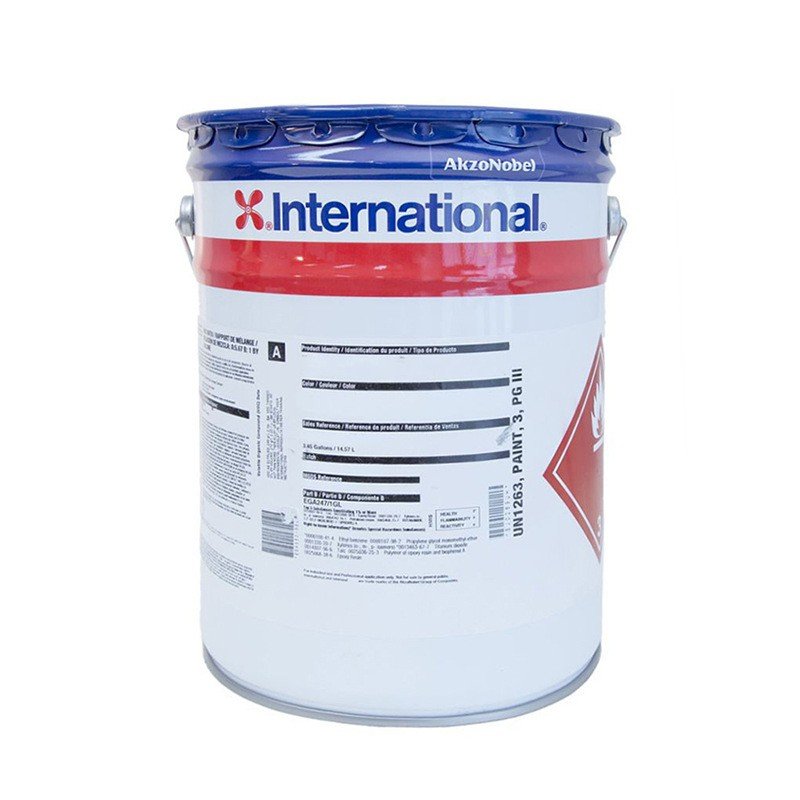
Interprime 160 Chemical Pre-Treatment is an auxiliary. Used for the chemical pre-treatment of galvanised steel before applying an anticorrosive coating system, to ensure good adhesion in areas where blasting or abrading is not possible. A phosphoric acid-based etching solution for treating galvanised steel. If this does not occur because the surface has oil, grease, flux or passivation, abrade the area and apply a second coat of Interprime 160. Parameters on this page: theoretical spreading rate 20 m²/L, number of components: one-component. Comparable models from the same brand: Ceilcote 6650 Ceilcrete, Intercrete 4820 waterproofing coating filler, Intercrete 4841 polymer-modified cement mortar coating.
Parameter source: AKZONOBEL original technical data sheet (TDS) for Interprime 160 Chemical Pre-Treatment; spreading rate and other values are converted from TDS parameters and provided for product selection reference only.
The above content is compiled from the manufacturer's datasheet and this site's parameter tables. For selection, coating systems and lead times, pleaseContact Usfor confirmation.
This page carries the full TDS for this product, translated from the manufacturer's original document. No file download is needed; for an original-language copy, send an enquiry.
| Volume Solids | — |
|---|---|
| Dry Film Thickness | — |
| Theoretical Spreading Rate | 20 m²/L |
| VOC | 2.75 lb/gal (330 g/L) US EPA Method 24 3… |
| Density / Specific Gravity | 1.06 kg/L (8.8 lb/gal) |
| Number of Components | One-component |
| Flash Point | 33°C (91°F) |
| Thinner | *See Product Characteristics |
| Mixing Ratio | N/A |
For more Q&A on selection, application, acceptance and defect diagnosis, seeFAQsection.
A phosphoric acid-based etching solution for treating galvanised steel
Used for the chemical pre-treatment of galvanised steel before applying an anticorrosive coating system, to ensure good adhesion in areas where blasting or abrading is not possible.
| Colour | Light blue INTERPRIME 160 |
|---|---|
| Gloss | Not applicable |
| Volume Solids | N/A |
| Typical thickness | N/A |
| Theoretical Spreading Rate | Not applicable (see practical spreading rate) |
| Practical Spreading Rate | The target consumption is 20 m²/L |
| Application Methods | Brush; drying time; recommended topcoat recoating interval |
Touch dry Hard dry
| Temperature | Minimum | Maximum |
| 10°C (50°F) | 2 h | 2 days |
| 15°C (59°F) | 2 h | 2 days |
| 25°C (77°F) | 2 h | 2 days |
| 40°C (104°F) | 30 min | 2 days |
* Touch dry and hard dry information does not apply to Interprime 160.
| Flash point (typical) | 33°C (91°F) |
|---|---|
| Product weight | 1.06 kg/L (8.8 lb/gal) |
| Volatile Organic Compounds | 2.75 lb/gal (330 g/L) US EPA Method 24; 329 g/kg EU Solvent Emissions Directive content, Commission Directive 1999/13 |
All surfaces to be coated must be clean, dry and free of contaminants. Before application, all surfaces must be assessed and prepared in accordance with ISO 8504:2000.
Oil and grease must be removed in accordance with the SSPC-SP1 solvent cleaning standard.
Galvanised steel: galvanised surfaces are diverse. To ensure the smooth application of the subsequent protective coating system, the preferred treatment is to degrease and clean the substrate as described above, then sweep blast to provide a physical key for the substrate. Alternatively, abrade to remove passivated zinc products.
Before applying Interprime 160, the surface should be cleaned to remove all traces of soluble zinc salts and thoroughly dried.
| Mixing | This product is a single-component coating; stir thoroughly with a power mixer before each use |
|---|---|
| Mixing ratio | N/A |
| Suitable for airless spray | N/A |
| Air Spray | Not applicable (with pressure pot) |
| Brush | Recommended | The target consumption is 20 m²/L |
| Roller application | Applicable | |
| Thinner | Clean water* | *See Product Characteristics |
| Cleaner | Clean water |
| Interruption of work | Flush all equipment thoroughly with clean water. Once opened, Interprime 160 cannot be resealed. If application is interrupted for an extended period, use freshly mixed material when work resumes. |
|---|---|
| Cleaning | Clean all equipment immediately after use with clean water. Periodic flushing of spray equipment during application is recommended. |
The frequency of cleaning depends on spray volume, temperature and time, including all interruptions.
Surplus paint and empty containers must be disposed of in accordance with the relevant regional regulations.
Interprime 160 is recommended only for etching galvanised surfaces. It is not suitable for the pre-treatment of other non-ferrous metals (such as aluminium).
The product contains phosphoric acid. Before starting application, the material safety data sheet (MSDS) must be consulted and appropriate personal protective equipment worn, such as gloves, goggles and face protection. Apply to a properly prepared and clean galvanised steel surface, then allow to dry. The metal etchant will react gradually; the blue surface will turn black. A uniform dark grey should ultimately be obtained. If this does not occur because the surface has oil, grease, flux or passivation, abrade the area and apply a second coat of Interprime 160.
Over-application produces a thick black powdery layer unsuitable for the subsequent topcoat. If this occurs, abrade or wash with fresh water to remove the excess acid or powdery residue, otherwise blistering and/or loss of adhesion of the topcoat may occur.
The product generally requires no thinner. However, if a high-density black powder layer results on the surface for application reasons, Interprime 160 must be thinned with clean, potable water and an application test carried out. Note that, in all cases, galvanised steel structures may require coatings of similar thickness to steel substrates to obtain adequate protection.
In damp corrosive environments, zinc salts will penetrate into thinly applied coatings.
The product holds the following approvals: • Complies with UK Department of Transport Document No. 155.
Interprime 160 was originally designed to meet the British Railways' need for an etching solution (corrosion solution).
Note: VOC values are typical and for guidance only. They may vary with colour and general production tolerances.
Galvanised steel treated with Interprime 160 is suitable for most International protective coating systems. However, attention should be paid to the dimensions of the galvanised steel in question. For example, flexible substrates are, in many cases, unsuitable for thick high-performance systems due to their limited elasticity.
Suitable topcoats include:
| Intercure 200 | Intergard 410 |
|---|---|
| Intercure 420 | Intergard 475HS |
| Intergard 251 | Interlac 658 |
| Intergard 269 | Interplus 770, Intergard 400. For other suitable topcoats, consult International. |
| For further information on the industry standards, terms and abbreviations used in this datasheet, see www.international-pc.com | In the following documents on the website: • Definitions and abbreviations • Surface preparation • Coating application • Theoretical and practical spreading rate. These sections are also available as separate publications on request. |
|---|
This product must be applied at the production site by professional applicators in accordance with the recommendations in this manual, the Material Safety Data Sheet and the instructions on the container label. Do not use this product without first reviewing the Material Safety Data Sheet (MSDS) that International Paint provides for its customers.
All work related to the application and use of this product must be carried out in accordance with the relevant national health, safety and environmental standards and regulations.
If welding or flame cutting is required on metal coated with this product, dust and fumes will be generated; use appropriate personal protective equipment and adequate local ventilation.
If in doubt about the suitability of this product, consult International Paint.
| Packaging Specifications | ||
| Volume | Packaging | |
| 10 L | 10 L |
For other available packaging sizes, contact International Paint.
Packaging Specifications
| 10 L | 10.45 kg |
|---|
| Shelf life | At 25 °C (77 °F), a minimum of 24 months, after which the product shall be checked before use. Store in a dry, cool place away from heat sources and ignition sources. |
|---|
© 2015/2/5 AkzoNobel. All rights reserved.
All registered trademarks mentioned in this publication are licensed to or owned by AkzoNobel.
www.international-pc.com
Information is subject to the manufacturer's latest version; the manufacturer's latest TDS prevails.
The technical parameters on this page are taken from the product's original manufacturer technical datasheet, the copyright of which belongs to the manufacturer. If a rights holder considers the presentation inappropriate, contact us for verification and handling.
Packaging specifications and batch lead times are subject to actual availability. PleaseContact Uscontact us for project-based calculation.